
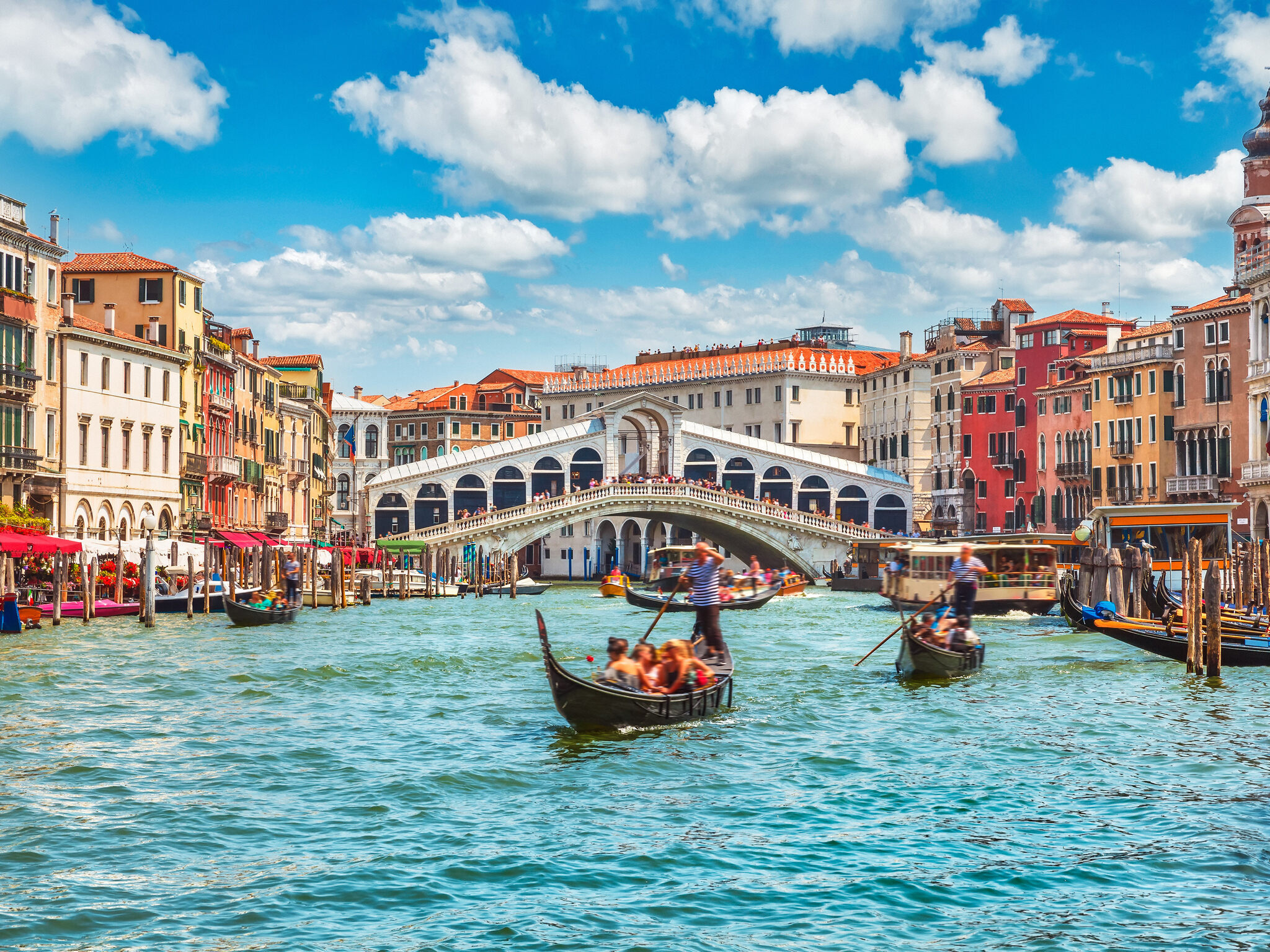
Why Venice Is Worth Visiting — Even on a Tight Budget
Experiencing Venice on a budget is entirely possible — if you know the right approach. This guide covers everything from the famous €2 gondola hack to the best free things to do in one of the world’s most unique cities.
No cars. No roads. Just 118 small islands connected by 400 bridges and a labyrinth of canals that serve as the city’s streets. A city that has existed in essentially the same form for over a thousand years, built on water, and still somehow functioning as a living, breathing place where people shop for groceries, go to school, and catch water buses to work.
There is nowhere else on Earth like it.
The reputation Venice has for being expensive is not entirely wrong — but it’s also not the full picture. Yes, tourist trap restaurants lining the Grand Canal will charge you €25 for a plate of pasta. But walk two streets back from the main tourist drag and you’ll find locals eating well for a fraction of that. The gondola ride everyone pictures costs €80–100 — but there’s a €2 version that most tourists never hear about.
Venice rewards budget travelers who know what they’re doing. This guide is exactly that.
How Long Should You Spend in Venice?
Two to three days is the sweet spot. Venice is compact — no larger than 10 square miles — and intensely walkable. Two full days is enough to see the major landmarks, get genuinely lost in the back canals, eat well, and feel the city properly. Three days allows for a day trip to the nearby islands of Murano and Burano.
Longer than three days and most travelers start to feel they’ve seen what Venice has to offer. It’s a city best experienced with intensity rather than extended stays.
Getting to Venice on a Budget
By Train
The most affordable and scenic way to arrive. Venice Santa Lucia train station sits at the northwestern edge of the islands — step off the train, walk outside, and you’re immediately on the Grand Canal. No transition, no bus ride, no airport transfer. Just instant Venice.
High-speed trains connect Venice to major Italian cities:
- From Milan: 2.5 hours, from €9–29
- From Florence: 2 hours, from €9–29
- From Rome: 3.5–4 hours, from €19–49
- From Bologna: 1.5 hours, from €9–19
Book in advance at trenitalia.com for the lowest fares. The regional (slower) trains are significantly cheaper than Frecciarossa high-speed if you have flexibility on timing.
By Plane
Venice Marco Polo Airport (VCE) serves the city. Budget airlines including Ryanair and easyJet connect it to major European cities affordably.
Airport to Venice transfer options:
- ACTV water bus (vaporetto): €15 per person, takes about 75 minutes, most scenic option
- Alilaguna water taxi: €15–27 depending on line, faster than vaporetto
- Land bus (ATVO or ACTV): €8, takes you to Piazzale Roma where you switch to water transport — cheapest option
How to Get Around Venice
Venice has no roads past the train station. No cars, no scooters, no bicycles. This results in exactly two ways to get around the islands:
Walking — Free
The primary and best way to experience Venice. The city rewards wandering — some of the most memorable moments happen when you’re genuinely lost in a quiet back canal neighborhood far from the tourist crowds.
A full day of sightseeing in Venice typically means 8–10 miles of walking. Wear comfortable shoes — the streets are uneven stone and there are hundreds of bridge steps throughout the day.
Pro tip: Resist the urge to follow Google Maps everywhere. Pick a general direction, put your phone away, and get intentionally lost. You’ll stumble onto things no guidebook covers.
Water Bus (Vaporetto) — €9.50/day pass
The vaporetto is Venice’s public water bus system — boats that run fixed routes along the Grand Canal and throughout the islands, with stops set up like a regular bus network. For getting between distant parts of the city or reaching the outer islands, it’s essential.
Ticket options:
- Single ride: €9.50 (not great value)
- 24-hour pass: €25
- 48-hour pass: €35
- 72-hour pass: €45
Purchase tickets and passes at kiosks throughout the city or online at veneziaunica.it.
Budget tip: If you’re only going short distances, walk. The vaporetto becomes worth it for longer crossings and island day trips.
Water Taxi — Expensive, skip it
Private water taxis are the premium option — fast, direct, and expensive at €70–100+ for most routes. Not necessary for budget travelers when the vaporetto covers the same ground for a fraction of the cost.
Things to Do in Venice on a Budget
The €2 Gondola Hack — Traghetto
Here’s the budget travel secret that most Venice visitors never discover.
A standard gondola ride costs €80–100 for a 30-minute private tour of the canals. For a solo traveler or couple, that’s a significant expense. But there is another option: the traghetto.
A traghetto is a basic gondola that operates as a public ferry service, crossing the Grand Canal at several points where there are no nearby bridges. The fare is €2 per person. The crossing takes about two minutes.
It’s not a romantic canal tour. You’ll be standing alongside locals on their way to work. But it puts you in a gondola on the Grand Canal next to the Rialto Bridge for €2 — and it makes for a great photo.
Where to find traghetti: Look for the “Traghetto” signs along the Grand Canal, particularly near the Rialto Market and Santa Sofia crossing.
Rialto Bridge — Free
Built in 1591, the Rialto Bridge is the most iconic bridge in Venice and one of the most recognizable structures in Italy. Spanning the Grand Canal at its narrowest point, the bridge is lined with small shops and offers some of the best views of the canal in both directions.
It gets extremely crowded at midday. Visit early morning — around 7–8am — to have it nearly to yourself and catch the best light for photos.
Basilica di Santa Maria della Salute — Free
One of Venice’s most dramatic pieces of architecture, the Salute basilica sits at the entrance to the Grand Canal and dominates the skyline from almost every vantage point in the city. Built in the 17th century as a votive offering after a devastating plague, the interior is as impressive as the exterior. Free to enter.
Campo Santa Margherita — Free
The most local square in Venice and the best place to experience the city the way residents actually live it. Campo Santa Margherita is a large, lively piazza in the Dorsoduro neighborhood — lined with affordable cafes and bars, populated by university students, local families, and far fewer tourists than the areas around San Marco.
Grab a €1.50 spritz from one of the surrounding bars (Venice is the birthplace of the Aperol Spritz) and spend an hour people-watching. This is the real Venice.
Gallerie dell’Accademia — €12
Venice’s premier art museum, housing the most important collection of Venetian painting in the world — works spanning from the 14th through 18th centuries including masterpieces by Titian, Tintoretto, Veronese, and Bellini. For art lovers, this is non-negotiable. For casual visitors, it’s a few hours well spent at a reasonable price.
Book tickets in advance at the museum website to avoid queues.
Peggy Guggenheim Collection — €18
One of the most important modern art museums in Europe, housed in Peggy Guggenheim’s former home directly on the Grand Canal in Dorsoduro. The collection spans Cubism, Surrealism, and Abstract Expressionism — Picasso, Pollock, Dalí, Mondrian, and Kandinsky among dozens of others. The building and garden alone are worth the visit.
Day Trip to Murano — Vaporetto fare
Murano is a small island 15 minutes from Venice by vaporetto, famous for its centuries-old glassblowing tradition. Several factories offer free demonstrations of the craft — watching a master glassblower create intricate sculptures from molten glass is genuinely impressive and costs nothing beyond the boat fare.
Murano also has a quieter, more residential feel than Venice proper — a pleasant contrast if you’ve been in the city for a day or two.
Day Trip to Burano — Vaporetto fare
Further out than Murano — about 40 minutes by vaporetto — Burano is one of the most visually striking places in Italy. The island is famous for its fishermen’s houses painted in vivid, almost impossibly bright colors: pink, orange, cobalt blue, lime green, deep red. The reason, historically, was so fishermen could identify their homes through the lagoon fog.
The result today is a photographer’s dream. Go on a weekday to avoid the worst of the tourist crowds. Burano is also known for handmade lace and a famous bakery (Pasticceria Palmisano) serving the local S-shaped cookies called bussolà.
Where to Eat in Venice on a Budget
Venice has a well-earned reputation for overpriced, mediocre tourist food. The solution is simple: avoid anywhere with photos on the menu, a host standing outside trying to wave you in, or a location directly on the Grand Canal. Walk two or three streets into the back neighborhoods and the food improves dramatically while prices drop.
Cafes and Quick Service
Il Paradiso Perduto A beloved local institution in the Cannaregio neighborhood — one of Venice’s most authentic areas, far from the San Marco tourist crowds. Lively atmosphere, affordable cicchetti (Venetian small plates, Venice’s answer to tapas), and a genuinely local crowd. One of the best value eating experiences in the city.
Al Timon A popular bacaro (traditional Venetian wine bar) along a canal in Cannaregio. The cicchetti are excellent and the wine is cheap by Venice standards. Eat standing at the canal’s edge with a glass of local white wine — this is how Venetians actually eat lunch.
Terminal 2.0 A reliable quick-service option for an affordable meal without the ceremony of a sit-down restaurant. Good for a fast lunch between sightseeing.
Full Service Restaurants
Ai Gondolieri One of the most respected traditional restaurants in Venice, located in Dorsoduro near the Guggenheim. Unusual for Venice in that it specializes in meat rather than seafood — a welcome change for travelers who have been eating fish for days. Reservations recommended.
Moeca Osteria A well-regarded local osteria with a focus on Venetian seafood traditions. Soft-shell crab (moeche) is the specialty when in season — a Venetian delicacy that’s worth trying if you visit in spring or fall.
Ristorante Lineadombra A waterfront restaurant in Dorsoduro with outdoor seating overlooking the Giudecca Canal. One of the few canal-side restaurants in Venice that delivers food quality matching its setting. Splurge-worthy for one dinner.
Ristorante ai Barbacani A charming restaurant tucked into a back street near the Rialto. Good Venetian classics at prices more reasonable than you’d expect given the quality. The setting — a narrow alley with tables outside — is quintessentially Venetian.
Bars and Nightlife
Terrazza Aperol Located near Piazza San Marco, Terrazza Aperol is the most scenic bar in Venice — a terrace overlooking the Grand Canal serving the city’s most iconic drink in its most iconic setting. Not the cheapest option but worth it for one drink at sunset.
Corner Pub A more casual, affordable bar popular with younger travelers and expats. A good option for a cheap drink in a relaxed setting without the tourist markup of the San Marco area.
Skillà Bar A local favorite for late-night drinks with a Venetian crowd. Affordable, unpretentious, and a good place to meet people who actually live in the city.
Venice Budget Breakdown
| Expense | Budget Option | Notes |
|---|---|---|
| Accommodation (per night) | €30–60 (hostel) | Book early — Venice hostels sell out |
| Gondola (traghetto) | €2 | Budget hack — 2 min Grand Canal crossing |
| Gondola (private tour) | €80–100 | For the boat, not per person |
| Vaporetto day pass | €25 | Worth it for island day trips |
| Lunch (cicchetti + wine) | €8–15 | At a bacaro, standing up |
| Dinner (sit-down) | €20–35 | Away from the main tourist areas |
| Gallerie dell’Accademia | €12 | Book ahead to skip queues |
| Peggy Guggenheim | €18 | One of Europe’s best modern art collections |
| Murano/Burano day trip | Vaporetto fare only | Glass demos are free |
| Daily Total | €80–150 | Excluding accommodation |
Venice Budget Travel Tips
- Eat cicchetti — Venetian small plates served at bacari (wine bars) are the most authentic and affordable way to eat in Venice. Order a few with a glass of house wine and you have a full meal for €10–15
- Avoid Piazza San Marco restaurants — the most expensive square in Italy. A coffee at Caffè Florian costs €25. Walk one street back and pay €1.50 for the same espresso
- Carry a water bottle — Venice has over 100 public drinking fountains called “nasoni” throughout the city. The water is clean and free. Refill your bottle instead of buying plastic
- Book accommodation far in advance — Venice has limited accommodation and it sells out, especially in summer and during Carnival (February)
- Visit in the off season — November through March (excluding Christmas/New Year) is when Venice is quietest, cheapest, and most atmospheric. The acqua alta (high water flooding) is a real possibility but manageable with waterproof shoes
- Avoid the main tourist paths — the route from the train station to San Marco is the most crowded corridor in the city. Explore Cannaregio, Dorsoduro, and Castello neighborhoods for a completely different experience
- Go early — Venice’s most iconic spots (Rialto Bridge, San Marco) are overrun by 10am. Early risers get the city to themselves
Frequently Asked Questions
Is Venice expensive for tourists? Venice has a reputation for being expensive but it’s manageable with the right approach. The biggest costs are accommodation and food — but eating at bacari (wine bars) instead of sit-down restaurants, using the traghetto instead of private gondolas, and staying in a hostel cuts costs dramatically. Budget travelers can do Venice well for €80–120 per day excluding accommodation.
What is the best budget tip for Venice? The traghetto — the €2 public gondola crossing. It puts you on a gondola on the Grand Canal for €2 instead of €80–100. Beyond that: eat cicchetti at bacari, drink coffee at the bar instead of sitting down, and avoid any restaurant within sight of the Grand Canal.
How many days do you need in Venice? Two to three days is ideal. Two days covers the major highlights comfortably. Three days allows for a day trip to Murano and Burano. Beyond three days most travelers feel they’ve seen what the city has to offer.
When is the best time to visit Venice on a budget? November through March (excluding Christmas) offers the lowest accommodation prices, smallest crowds, and most atmospheric conditions. The acqua alta flooding is a possibility but easily handled with waterproof shoes. April through June and September through October are shoulder season — good weather, moderate prices, manageable crowds.
Is Venice walkable? Entirely. Venice has no cars, no roads, and no bicycles past the train station. Everything is on foot or by water. An average day of sightseeing involves 8–10 miles of walking on uneven stone streets and bridge steps. Comfortable footwear is essential.
What is acqua alta in Venice? Acqua alta (“high water”) is seasonal flooding that affects Venice, typically between October and March, caused by a combination of tides, wind, and atmospheric pressure. During acqua alta, parts of the city — particularly around Piazza San Marco — can flood with several inches of water. It’s manageable with waterproof boots or shoe covers (sold cheaply throughout the city) and rarely disrupts a trip significantly.
Can you do Venice as a day trip? Technically yes — Venice is reachable as a day trip from cities like Florence, Bologna, or Milan by train. However a full day only scratches the surface. At minimum, an overnight stay is recommended to experience Venice in the early morning and evening when the day trippers have gone and the city reverts to something much closer to what it actually is.
Planning a trip to Venice or Italy? Reach out at hello@outofmanhattan.com — we’re happy to help with any questions before you go.
Leave a Reply