
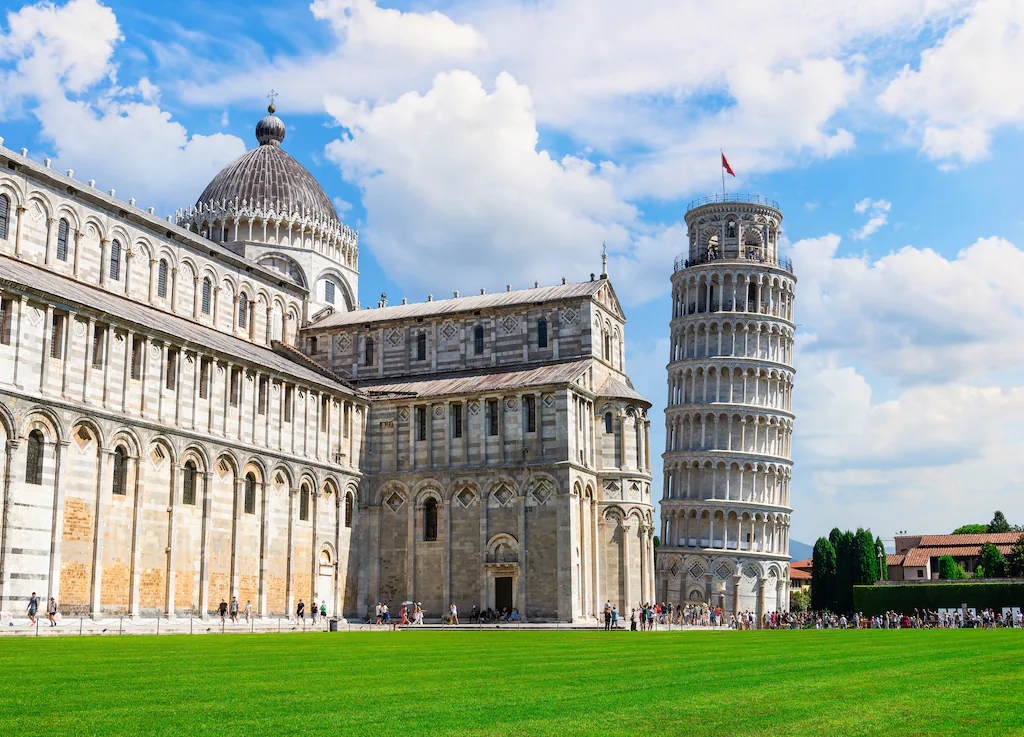
Why Pisa Is Worth a Day of Your Italy Trip
Spending one day in Pisa Italy is one of the easiest and most satisfying day trips you can make from Florence — and this guide covers exactly how to do it on a budget.
Let’s be honest about Pisa: the city exists, for most visitors, as a single photograph.
You know the one — tourist holding up the Leaning Tower with an outstretched hand. It’s one of the most reproduced images in travel photography and, admittedly, one of the more satisfying bucket list moments in Italy to actually tick off in person.
But Pisa is more than a photo opportunity. The Piazza del Duomo — the square that houses the tower — is one of the most impressive architectural complexes in Europe, featuring a cathedral, baptistery, and monumental cemetery alongside the tower itself. The surrounding city has a genuine Tuscan character, a university town energy, and a compact shopping district that makes for a pleasant few hours of wandering.
The key insight: Pisa is a day trip, not a multi-day destination. One full day is exactly the right amount of time. And because it’s only an hour from Florence by train, it fits perfectly into almost any Tuscany itinerary without disrupting anything else.
This guide covers exactly how to do it — affordably, efficiently, and well.
Getting to Pisa on a Budget
By Train — Best Option
Pisa is one of the most accessible day trips in Tuscany. Pisa Centrale — the main train station — is served by frequent direct connections from Florence and several other Tuscan cities.
- From Florence: approximately 1 hour, tickets from €9–15 on regional trains
- From Lucca: approximately 30 minutes, tickets from €4–8
- From Rome: approximately 3 hours with a connection, from €19–29
Book in advance at trenitalia.com for the lowest fares. Regional trains are significantly cheaper than high-speed options and perfectly adequate for this route.
By Bus
Long-distance buses operated by FlixBus and other carriers serve Pisa from Florence and other Tuscan cities, often at lower prices than the train. Journey times are longer but the cost savings can be meaningful for tight budgets.
By Plane
Pisa has its own international airport — Galileo Galilei Airport (PSA) — one of the most convenient in Tuscany. Budget airlines including Ryanair connect it to destinations across Europe at very affordable fares. If you’re flying into Tuscany specifically, Pisa’s airport is worth considering over Florence.
Getting from the airport to the city center: The Pisamover — a fully automated tram — runs directly from the airport to Pisa Centrale train station in about 5 minutes for €2.70. It’s one of the easiest airport-to-city connections in Italy.
Getting Around Pisa
Walking
Pisa Centrale is approximately one mile from the Leaning Tower and Piazza del Duomo — a 20-minute walk through the city center. Walking is the best option for seeing the city along the way, passing through the shopping district on Corso Italia and crossing the Arno River.
By Bus — €2 one way
If you’d rather skip the walk, local buses run from Pisa Centrale directly to Piazza del Duomo. A one-way ticket costs €2 and the ride takes about 15 minutes. Tickets are available at the station or at tabacchi (tobacco shops) throughout the city.
Pro tip: Walk one direction, take the bus the other. Breaks up the day and ensures you see the city from both sides.
One Day in Pisa: The Perfect Itinerary
Morning — Piazza del Duomo
Head straight to Piazza del Duomo first thing. This is the heart of Pisa and the reason most visitors come — the square contains four major landmarks within walking distance of each other, all built in the same creamy white marble that gives the complex its distinctive unified appearance.
The Leaning Tower of Pisa — from €20
The tower needs no introduction. What most visitors don’t realize until they’re standing in front of it: the lean is far more dramatic in person than it appears in photos. The tower tilts approximately 4 degrees from vertical — enough that standing at the base and looking up creates a genuinely disorienting sensation.
Construction began in 1173 and took nearly 200 years to complete, interrupted by wars and — as it turned out — significant structural problems caused by soft ground on one side. The lean began almost immediately and has been both its defining characteristic and its greatest engineering challenge ever since.
Climbing the tower: Tickets to climb the 294 steps to the top start at €20 per person. Timed entry slots are assigned — book in advance at the official website to guarantee your preferred time, especially in summer when slots sell out weeks ahead.
The views from the top over Piazza del Duomo and the surrounding Pisan rooftops are excellent and well worth the climb.
Budget tip: The tower is also free to photograph from the outside, and the leaning silhouette against the sky is just as striking from the square below. If the budget is tight, skip the climb and spend the €20 on a great dinner instead.
Cattedrale di Pisa (Pisa Cathedral) — €5 or included in combo
The cathedral predates the tower, begun in 1063, and is considered one of the finest examples of Romanesque architecture in Italy. The interior is vast and elaborately decorated — bronze doors, a pulpit by Giovanni Pisano, a 16th-century coffered ceiling, and a famous lamp that allegedly inspired Galileo’s theory of the pendulum.
Entry to the cathedral alone costs €5. A combo ticket covering the cathedral, baptistery, monumental cemetery, and museum starts at €28 — excellent value if you plan to see all four.
Combo tickets: Available at the ticket office in Piazza del Duomo or in advance at getyourguide.com.
Battistero di Pisa (Baptistery) — included in combo
The baptistery is the large circular building facing the cathedral’s facade and is the largest baptistery in Italy. The acoustics inside are extraordinary — the domed interior creates a natural echo effect that staff demonstrate periodically throughout the day. Worth timing your visit to catch it.
Camposanto Monumentale (Monumental Cemetery) — included in combo
The least visited of the four landmarks and arguably the most atmospheric. The Camposanto is a medieval cemetery enclosed within a long rectangular marble building on the north side of the square. The interior arcade contains ancient sarcophagi, Roman sculptures, and fragments of medieval frescoes — including remnants of a famous 14th-century fresco cycle that was severely damaged in World War II.
The combination of the quiet interior, the history, and the contrast with the tourist activity outside makes it a genuinely moving stop.
Afternoon — Explore the City
After the Piazza del Duomo, cross back over the Arno River into the city center for the afternoon.
Corso Italia — Shopping and Lunch
Corso Italia is Pisa’s main shopping street, running north from the train station toward the river. It’s lined with Italian boutiques, international brands (Zara, H&M, Calzedonia), cafes, and quick-service restaurants — a good place to grab lunch and browse before continuing your day.
For lunch, skip the tourist-facing restaurants near the tower and find a spot along Corso Italia or in the side streets nearby. A simple pasta or sandwich at a local bar will run €6–12 and be significantly better quality than anything on the tourist circuit around Piazza del Duomo.
The Arno Riverfront
A quiet walk along the Lungarno — the riverside promenade — is one of Pisa’s most underrated experiences. The view of the colorful buildings lining the river, reflected in the water, is genuinely beautiful and almost entirely crowd-free compared to the tower area.
Where to Eat in Pisa on a Budget
Pisa is a university town, which means affordable eating options are abundant if you know where to look. The area immediately surrounding the Leaning Tower is the worst value — overpriced tourist menus aimed at day trippers. Move toward the city center and prices drop considerably.
General rules for eating affordably in Pisa:
- Eat your main meal at lunch — many restaurants offer a fixed-price lunch menu (menù del giorno) for €10–15 including a first course, second course, and water or wine
- Grab a quick bite at a local bar — a panino or tramezzino (crustless sandwich) costs €3–5 and is perfectly satisfying between sightseeing
- Avoid anywhere with photos on the menu near the tower
- Look for the word “trattoria” or “osteria” — these signal traditional, locally oriented restaurants rather than tourist-facing ones
Where to Go After Pisa — Two Perfect Add-Ons
Pisa is compact enough that most visitors find themselves with significant time left after covering the main sights. Rather than heading back to Florence immediately, consider adding one of these nearby stops — both are under 30 minutes from Pisa by train.
Viareggio — 10 Minutes by Train
A small beach town on the Tyrrhenian coast, Viareggio is one of the best sunset destinations in Tuscany. The train from Pisa takes approximately 10 minutes and tickets cost around €3–5.
Viareggio’s long seafront promenade is lined with beach clubs, restaurants, and a genuinely beautiful stretch of coastline. Unlike the more famous Cinque Terre beaches, Viareggio draws primarily Italian visitors rather than international tourists — giving it an authenticity that’s increasingly hard to find on the Tuscan coast.
The town is best in the late afternoon when the day-tripping crowds have thinned and the light over the water turns golden. Stay for sunset, grab a seafood dinner, and take the evening train back to Florence.
Best for: beach lovers, sunset chasers, travelers who want a genuinely local Tuscan coastal experience
Lucca — 30 Minutes by Train
One of the most underrated cities in all of Tuscany. Lucca is a small, beautifully preserved medieval city enclosed within a set of Renaissance-era city walls that are so wide they’ve been converted into a public walking and cycling path running the entire perimeter of the city.
The walls are the defining experience of Lucca — rent a bicycle at the train station for €3–5/hour and ride the full circuit for one of the most unique urban experiences in Italy. Inside the walls, Lucca has Roman amphitheater ruins now transformed into a residential piazza, medieval towers, excellent restaurants, and the kind of unhurried Tuscan atmosphere that larger cities have largely lost.
Lucca sees far fewer tourists than Florence, Siena, or San Gimignano, which keeps prices lower and the experience more authentic. The train from Pisa takes approximately 30 minutes and tickets cost around €4–8.
Best for: travelers who want authentic Tuscany without the crowds, cyclists, architecture enthusiasts
Pisa Budget Breakdown
| Expense | Cost |
|---|---|
| Train from Florence (return) | €18–30 |
| Bus from Pisa Centrale to tower | €2 each way |
| Leaning Tower climb | €20 |
| Combo ticket (tower + cathedral + baptistery + cemetery) | €28 |
| Lunch (local trattoria) | €10–15 |
| Gelato | €2–4 |
| Train to Viareggio or Lucca (optional) | €4–10 return |
| Total (without optional add-on) | €52–79 |
| Total (with Viareggio or Lucca) | €56–89 |
Pisa Travel Tips
- Book tower tickets in advance — timed entry slots sell out, especially June through August. Book at the official Piazza del Duomo ticket site or GetYourGuide
- Go early — the tower area gets extremely crowded by 11am in summer. Arriving at opening time (8am) means shorter queues and better photos
- The combo ticket is the best value — if you plan to see more than just the tower, the €28 combo covering all four monuments saves money compared to buying individually
- Bring cash — smaller restaurants and cafes throughout Pisa still prefer cash
- Wear comfortable shoes — the tower climb involves 294 steps on a spiral staircase with no handrail on the outer edge. Not suitable for visitors with vertigo
- The tower photos are best from the south side — the lean is most visible and dramatic when photographed from directly in front of the cathedral
Frequently Asked Questions
Is Pisa worth visiting for just one day? Absolutely — one day is the ideal amount of time for Pisa. The main sights are concentrated in and around Piazza del Duomo and are easily covered in a morning, leaving the afternoon for the city center and an optional add-on trip to Viareggio or Lucca. Longer than one day and most travelers run out of things to do.
How much does it cost to see the Leaning Tower of Pisa? Climbing the tower costs €20 per person. A combo ticket covering the tower, cathedral, baptistery, and monumental cemetery starts at €28. Entry to the piazza and exterior viewing is free. Book in advance at the official ticket site — timed entry slots sell out during peak season.
Is Pisa expensive? Pisa is one of the more affordable cities in Tuscany, helped by its large student population. The tourist area around the tower is pricier — move into the city center for significantly better value on food and drinks. A full day in Pisa including train fare, tower entry, and meals is achievable for €50–80.
How far is Pisa from Florence? Pisa is approximately 50 miles west of Florence — about one hour by regional train. Trains run frequently throughout the day, making it one of the easiest day trips from Florence. Tickets start from €9 booked in advance on trenitalia.com.
Can you see the Leaning Tower for free? The exterior and surrounding piazza are free to visit and photograph. Climbing the tower costs €20. The lean is clearly visible and dramatic from street level, so even if you skip the climb you’ll get the full visual impact of the tower — and the classic tourist photo.
What is the best time of year to visit Pisa? April through June and September through October offer the best combination of good weather and manageable crowds. July and August are peak summer — very hot and very crowded around the tower. November through March is quieter and cheaper but some days are cold and grey.
Is Lucca or Viareggio better as an add-on to Pisa? Depends on what you’re after. Viareggio is the better choice for beach lovers and sunset seekers — especially in summer. Lucca is the better choice for travelers interested in history, architecture, and authentic Tuscany without tourist crowds. Both are worth a visit if your Italy itinerary allows for it.
Planning a trip to Pisa or Tuscany? Reach out at hello@outofmanhattan.com — we’re happy to help with any questions before you go.
Leave a Reply