
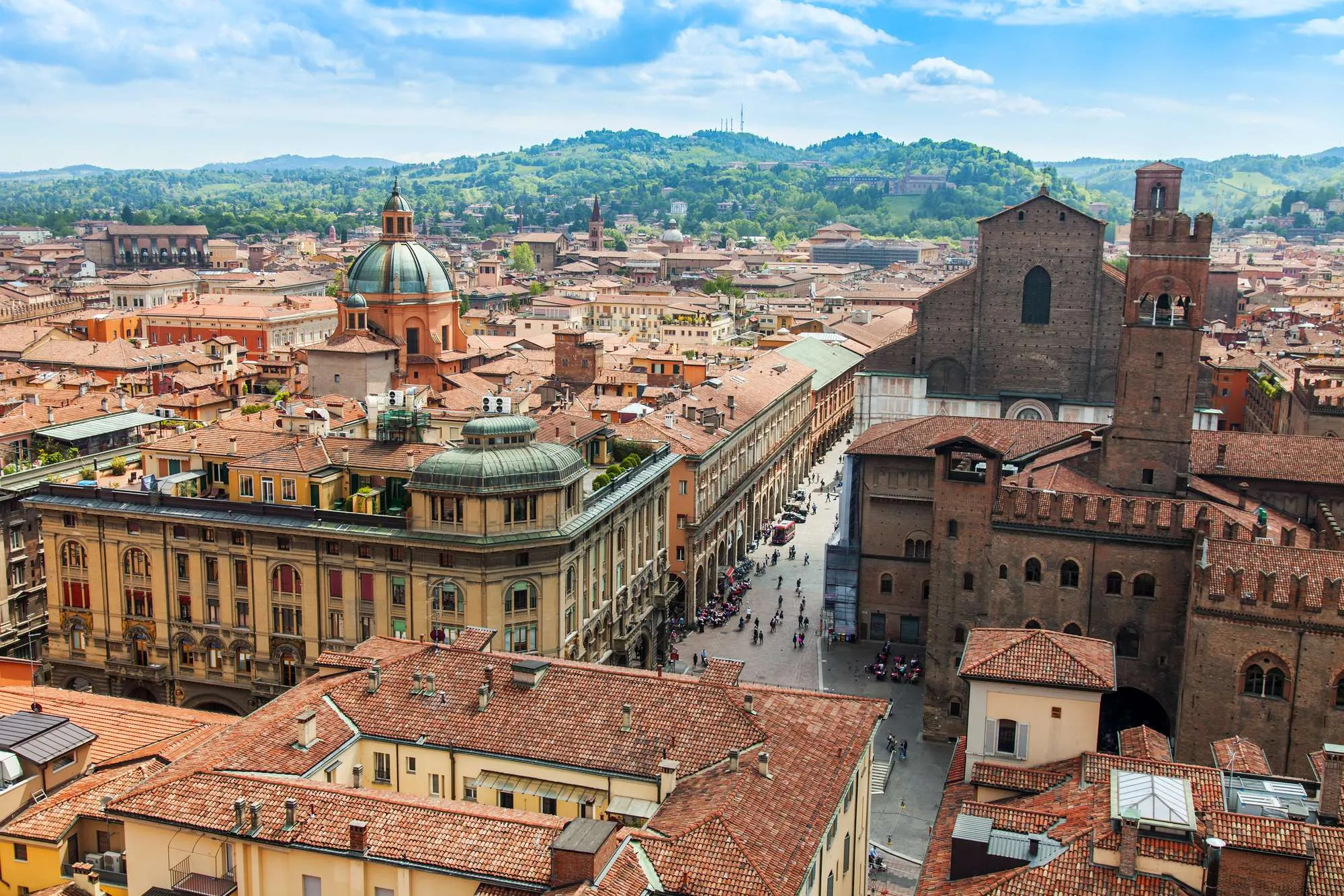
Why Bologna Deserves a Spot on Your Italy Itinerary
Bologna is one of Italy’s most underrated cities — and one of its most rewarding for budget travelers. Planning one day in Bologna Italy is one of the best decisions you can make on any Italy itinerary.
Just 40 minutes north of Florence by train, Bologna punches well above its weight. Medieval towers, ancient Roman ruins hiding under a public library, secret canals tucked behind a small window in a wall, and a food scene that gave the world bolognese sauce, mortadella, and tortellini. This city invented half of what you think of as Italian food.
Most travelers blow straight past it on the way to Florence or Venice. That’s a mistake — and it means fewer crowds and cheaper prices for those who stop.
This guide covers exactly how to spend one day in Bologna, Italy, without spending a fortune.
How to Spend One Day in Bologna Italy
The easiest and most affordable way to reach Bologna is by train. Bologna Centrale is one of Italy’s major rail hubs, meaning frequent connections from nearly every major city.
- From Florence: 35–40 minutes, tickets from €9–15 on Trenitalia
- From Rome: approximately 2 hours, tickets from €19–29
- From Milan: approximately 1 hour, tickets from €9–25
Book in advance at trenitalia.com for the lowest fares. The high-speed Frecciarossa trains are fastest but pricier — regional trains are slower and significantly cheaper.
Bologna also has a small airport (BLQ) with budget airline connections across Europe, and a large bus station served by FlixBus and Itabus for ultra-budget intercity travel.
Pro tip: Bologna Centrale sits on the northern edge of the city center. Step off the train and everything worth seeing is directly south — making it one of the most walkable arrivals in Italy.
One Day in Bologna: The Perfect Itinerary
Morning — Start at the Two Towers
Begin your day at the Two Towers — Le Due Torri in Italian — Bologna’s most iconic landmark and the perfect orientation point for the rest of the day.
These two medieval towers were built in the 12th century by rival noble families as symbols of wealth and power. The taller of the two, Torre degli Asinelli, stands at 97 meters and leans slightly to one side. If you want a workout and a panoramic view over Bologna’s terracotta rooftops, you can climb it for €3–5.
Arrive here first — it gets busy by midday and the climb is much more pleasant in the cooler morning air.
Budget tip: Several cafes surround the piazza — grab a €1.50 espresso and a cornetto before starting your walk.
Mid-Morning — Explore the Porticoes and City Center
From the Two Towers, you’re already in the heart of Bologna’s centro storico. One of the first things you’ll notice are the porticoes — covered archways built directly into the facades of buildings that line nearly every street in the city center.
Bologna has over 40 kilometers of these covered walkways, a feature unique to the city and now a UNESCO World Heritage Site. They keep you dry in rain and shaded in summer heat — a practical luxury that makes exploring on foot genuinely pleasant.
Within walking distance of the Two Towers:
Basilica di San Petronio — Free
One of the largest churches in the world and Bologna’s most impressive piece of architecture. Construction began in 1390 and was never actually finished — giving the facade a striking half-completed appearance that has become part of its identity. Free to enter.
Teatro Anatomico — €3
One of Bologna’s most unusual attractions. This ornate 17th-century lecture hall was built specifically for anatomy lectures and human dissections at the University of Bologna — one of the oldest universities in the world. The carved wooden tiers, intricate ceiling art, and historical atmosphere make the €3 entry completely worth it.
La Piccola Venezia — Free
Bologna’s best-kept secret. Known as “Bologna’s Secret Venice,” La Piccola Venezia is a hidden canal system running beneath the city. You view it through a small window cut into the wall along Via Piella — easy to miss if you don’t know it’s there. Free, and one of the most photographed spots in the city once travelers discover it.
Biblioteca Salaborsa — Free
A public library built in the late 1800s — but what sits beneath it is the real story. The ground floor features transparent panels revealing the ancient Roman ruins the library was built on top of. Walking over 2,000-year-old ruins while browsing a modern public library is one of Bologna’s most surreal experiences. Completely free.
Lunchtime — Eat Like a Local at the Market
Via Pescherie Vecchie
This covered market street is one of the best places in Italy to eat affordably and well. Vendors sell fresh produce, aged cheeses, cured meats, and local delicacies in close quarters, with several small restaurants and bars tucked in between.
051 Osteria
Located directly on Via Pescherie Vecchie, 051 is a small, affordable spot specializing in exactly the products Bologna is famous for. Order a customizable charcuterie board featuring real mortadella and parmigiano reggiano — two products that originated in this region and taste fundamentally different here than anywhere else in the world. Expect to spend €8–14 for a satisfying lunch.
Afternoon — Art, Gardens, and Architecture
Pinacoteca Nazionale — €5
Bologna’s national art museum houses hundreds of works spanning the late 13th through early 20th centuries, including original paintings by Raphael and Titian. One of the most undervisited major art museums in Italy — no queues, no crowds, world-class collection.
Botanical Garden and Herbarium — Free
Located within the University of Bologna campus, these gardens are the perfect afternoon slowdown. Shaded, peaceful, and completely free — a good place to rest your feet before the evening.
Evening — Aperitivo and the Best Bolognese in the World
Bologna’s food scene is reason enough to visit Italy. The city gave its name to bolognese sauce — called ragù locally — and takes it seriously in a way that no restaurant outside Italy ever quite matches.
Dinner: Trattoria dal Biassanot
Nicknamed “home of ragù”, Trattoria dal Biassanot serves what many consider the best bolognese sauce in Bologna. Expect handmade tagliatelle al ragù that bears almost no resemblance to the ground beef pasta sauce you know from home. Budget €15–20 for a full dinner with wine.
Aperitivo: Bamboo Bar
Bologna has a strong aperitivo culture — the early evening tradition of drinks paired with free or low-cost snacks. Bamboo is a trendy local bar with a wide cocktail menu and generous aperitivo spread. Budget €8–12 for drinks and snacks.
Quick option: Regina Sofia
Central, affordable, and excellent. Regina Sofia serves pizza and charcuterie boards at prices that make it one of the best value spots in the city center.
Bologna Budget Breakdown — One Day
| Expense | Estimated Cost |
|---|---|
| Train from Florence (return) | €18–30 |
| Two Towers climb | €3–5 |
| Teatro Anatomico | €3 |
| Lunch at 051 Osteria | €8–14 |
| Pinacoteca Nazionale | €5 |
| Dinner at Trattoria dal Biassanot | €15–20 |
| Aperitivo at Bamboo | €8–12 |
| Total | €60–89 |
Several of the best attractions — the porticoes, La Piccola Venezia, Biblioteca Salaborsa, the Botanical Garden — are completely free.
Optional Add-Ons
City Red Bus Tour — €28/person If you prefer a guided overview, the City Red Bus runs hour-long tours through Bologna’s highlights with historical commentary. A good option if this is your only day and you want context.
Taste Bologna Food Tour — from €75/person The top-rated food tour in the city, covering tastings, wine, and cooking context from local guides. Pricier but excellent value for serious food travelers. More at tastebologna.net.
Frequently Asked Questions
Is Bologna worth visiting for just one day? Absolutely. One full day is enough to see the major landmarks, eat exceptionally well, and get a real feel for the city. Bologna rewards slow travel, so if you can extend to two days, do it — but one day is a very satisfying visit.
Is Bologna expensive? Bologna is one of the more affordable major cities in northern Italy. Most landmark admissions are under €5, and you can eat very well for €10–15 at lunch. It compares favorably to Florence and Venice on price.
How do I get from Bologna to Florence? By high-speed train in 35–40 minutes. Tickets start from €9 booked in advance on trenitalia.com. Bologna makes an excellent day trip from Florence or vice versa.
What is Bologna most famous for? Bologna is famous for its food — particularly mortadella, tortellini, tagliatelle al ragù (bolognese sauce), and parmigiano reggiano all either originated here or are produced in the surrounding region. It is also home to the University of Bologna, the oldest university in the world, founded in 1088.
What is the best time of year to visit Bologna? April through June and September through October offer the most comfortable temperatures for walking the city. July and August are hot but quieter on the tourist front compared to Florence or Rome.
Have questions about planning a trip to Bologna or Italy? Reach out at hello@outofmanhattan.com — we’re happy to help.
Leave a Reply