
Oahu on a Budget: How to See the Whole Island Affordably
Traveling to Oahu on a budget is one of the smartest decisions you can make for a Hawaii trip — and far more achievable than most travelers expect. This guide covers the entire island with the budget traveler in mind.
Every Hawaiian island has its appeal. Maui has the resort luxury. Kauai has the raw natural beauty. The Big Island has the volcanoes. But Oahu — Hawaii’s most populated and most visited island — has something none of the others can match for budget travelers: variety.
More beaches, more hikes, more food options, more things to do, and more ways to fill a week without spending a fortune than any other island in the state. Oahu is home to Honolulu, Waikiki, Pearl Harbor, the legendary North Shore surf breaks, and a network of hiking trails that includes some of the finest views in the entire Pacific.
It is also the most misunderstood Hawaii island for budget travelers — commonly dismissed as too touristy or too expensive. That reputation belongs to Waikiki specifically, not Oahu as a whole. Step outside the resort corridor and you find an island full of local beaches, roadside hidden gems, farmers markets, shrimp trucks, and free hikes that cost nothing and deliver everything.
This guide covers all of it — organized by region, budget-focused throughout, and built for travelers who want to see the whole island rather than just the Waikiki strip.
Getting to Oahu on a Budget
Flying In
Honolulu International Airport (HNL) is the primary gateway to Hawaii and one of the most connected airports in the Pacific. Direct flights operate from major US mainland cities including Los Angeles, San Francisco, Seattle, Phoenix, and New York.
Budget tips for flights:
- Book 6–10 weeks in advance for the best mainland fares
- Southwest, Alaska Airlines, and Hawaiian Airlines frequently run sales on West Coast routes — set fare alerts on Google Flights
- Flying into Oahu is almost always cheaper than flying into Maui or Kauai directly — use Oahu as your entry point and island-hop if needed
Getting Around Oahu
Unlike Kauai, Oahu has a functioning public bus system — TheBus — that covers most of the island for $3 per ride or $7.50 for a day pass. For budget travelers willing to plan around bus schedules, it’s possible to see much of Oahu without a rental car.
That said, a rental car opens up the west side, the North Shore, and many of the hidden gems in this guide that buses don’t reach conveniently. If splitting costs between two or more travelers, a rental car is worth it.
South Shore — Honolulu, Waikiki, and Beyond
Hanauma Bay — $25 entry fee (reservations required)
One of the finest snorkeling destinations in Hawaii — a protected marine preserve inside a volcanic crater that fills with crystal-clear water. The bay is home to hundreds of species of tropical fish and sea turtles in a setting that looks almost too perfect to be real.
Important: Hanauma Bay requires advance reservations and charges a $25 entry fee per person. Reservations open 60 days in advance on the Hanauma Bay website and sell out extremely fast — book the moment your travel dates are confirmed. Walk-up entry is limited and unreliable in peak season.
The bay is closed on Tuesdays. Arrive at opening time (7am) for the calmest water and best snorkeling conditions before the afternoon wind picks up.
Diamond Head Crater Hike — $5/person
The most iconic hike on Oahu and one of the most recognizable landmarks in all of Hawaii. Diamond Head is a volcanic crater on the southeastern edge of Waikiki — the 0.8-mile round trip trail climbs 560 feet to the summit through the crater interior, emerging at a panoramic viewpoint overlooking Waikiki, the Pacific coastline, and the surrounding island.
Short, steep, and enormously rewarding. The trail involves narrow tunnels, steep staircases, and a final push to the summit lookout — all over in about 1–1.5 hours.
Budget tip: Book timed entry tickets in advance at hawaiistateparks.reserveamerica.com. Entry is $5 per person. Go at opening time (6am) to beat the heat and the crowds.
China Walls — Free
A local secret on the south side of the island accessed through a residential neighborhood in Hawaii Kai. China Walls is a flat lava shelf that drops directly into deep ocean water — popular with experienced surfers, cliff jumpers, and locals watching the sunset with Diamond Head framing the horizon behind them.
Not a swimming beach — the water is rough and the entry points are rocky. But as a sunset watching spot with that Diamond Head silhouette, it’s one of the best free views on the island.
Best time: late afternoon through sunset
Halona Beach Cove — Free
A hidden gem on Highway 72 between Hanauma Bay and Sandy Beach. Pull over at the Halona Blowhole lookout and look down — below the cliff is a small, sheltered beach cove with turquoise water surrounded by volcanic rock. A steep path leads down to it.
The cove is small and gets crowded when discovered, but still feels worlds away from Waikiki. The blowhole itself — a lava tube that shoots seawater into the air with incoming waves — is worth watching from the lookout above.
Note: This is a local spot. Be respectful, leave no trace, and be aware of ocean conditions before entering the water.
Lanikai Pillbox Trail — Free
One of Oahu’s most Instagrammed hikes and deservedly so. The Lanikai Pillbox Trail is a short, steep 1.6-mile round trip climb (613 feet elevation gain) to two World War II-era military pillboxes covered in murals and graffiti on the ridge above Lanikai Beach.
The views from the top — looking down over the turquoise waters of Lanikai and Kailua Bay, with the Mokulua Islands offshore — are among the finest on the island. Go at sunrise for the best light and smallest crowds.
Trailhead: Kaelepulu Drive, Kailua. Street parking available nearby.
Makapu’u Point Lighthouse Trail — Free
Oahu’s most eastern point and one of its most accessible hikes. The 2.5-mile paved trail climbs steadily to a lighthouse overlook with unobstructed ocean views. About halfway up, an unmarked side path leads to a series of natural tide pools carved into the rock — deep enough to swim in, with incredible clarity.
Important: Exercise real caution on the descent to the tide pools — the path is steep and the pools contain sea urchins. Water shoes are strongly recommended.
In winter (December through May) this is also one of the best spots on Oahu to watch humpback whales from shore — completely free.
East Side and Windward Coast
Ahupuaʻa ʻO Kahana State Park — Free
The single most underrated spot on Oahu. Kahana Bay on the windward coast is a protected state park featuring a curved, palm-lined bay with calm water, a forested hiking trail, and camping facilities — all without the crowds that define the south shore.
The Pu’upiei Trail climbs from the park to a ridgeline with sweeping views of the entire windward coast — one of the finest panoramic hikes on the island with a fraction of the foot traffic of Diamond Head.
Camping: The park has tent camping available at very low cost — one of the best options on the island for budget overnight stays. Permits required through the Hawaii State Parks website.
Hoʻomaluhia Botanical Garden — Free
A 400-acre botanical garden at the base of the dramatic Koʻolau Mountain Range on the windward side of the island. The garden is open to the public at no charge and features walking trails through themed plant collections representing tropical regions from around the world.
The mountain backdrop — sheer green cliffs rising thousands of feet directly behind the garden — is one of the most dramatic natural settings anywhere on Oahu. A perfect half-morning activity before heading to the North Shore.
Free camping is also available here on weekend nights with advance permits from the City and County of Honolulu — one of the most scenic free camping options on the island.
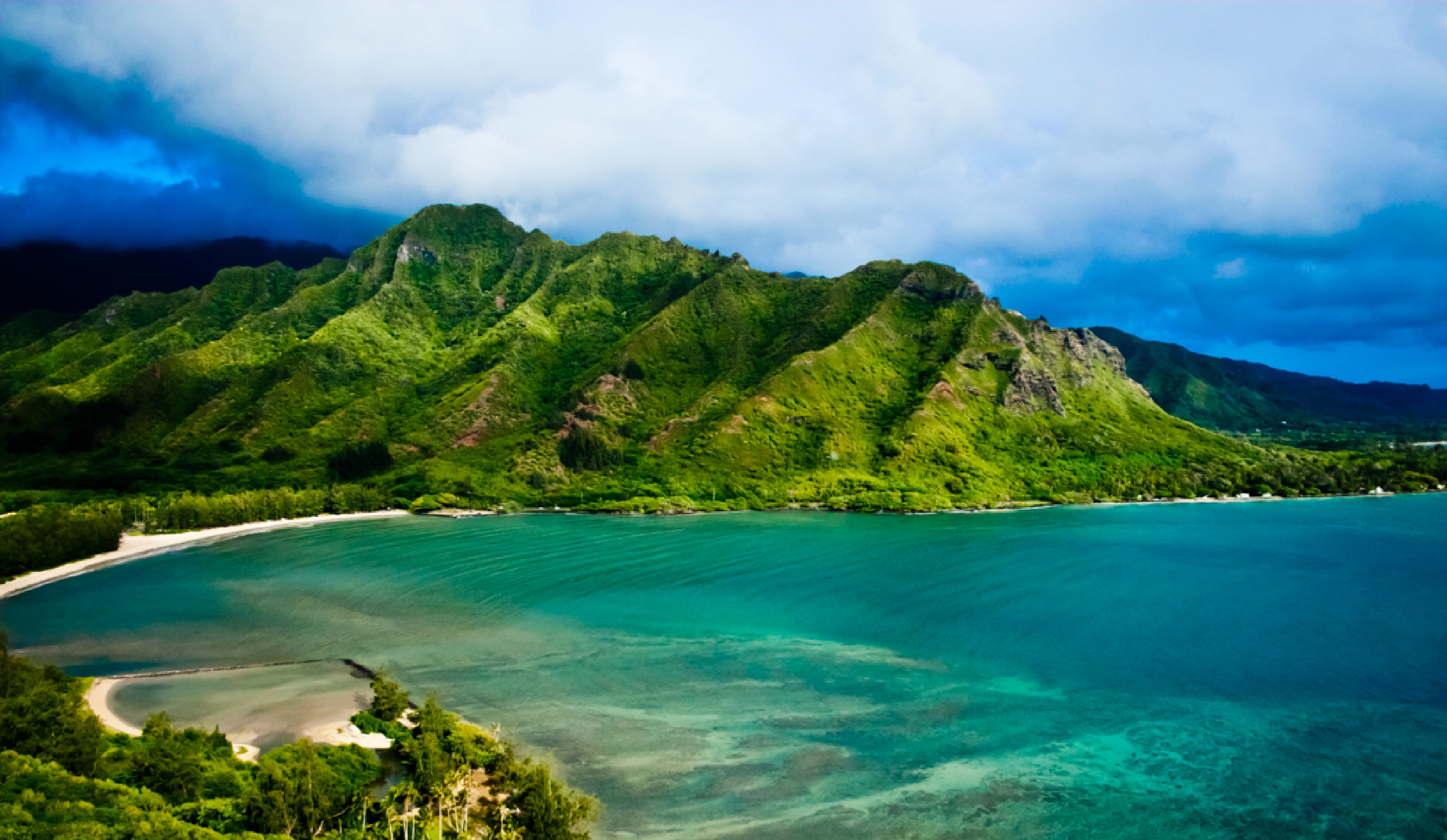
Mokoliʻi (Chinaman’s Hat) — Free
A small, conical island just offshore from Kualoa Regional Park on the windward coast. Locals kayak, paddleboard, or swim the 30–45 minute crossing to the island, where you can scramble to the summit for views back toward the Koʻolau Mountains.
Kayak rentals are available at Kualoa Beach Park for around $20–30/hour. Alternatively, bring a paddleboard or simply swim across if conditions are calm and you’re a confident open water swimmer.
Note: Always check current ocean conditions and wind forecast before attempting the crossing. Go with an experienced local or rental company if you’re unfamiliar with the area.
Maunawili Falls — Free
A 2.3-mile hike through dense jungle to a waterfall and swimming hole in the Ko’olau foothills. One of the most rewarding moderate hikes on Oahu — the trail is lush, muddy after rain, and ends at a falls where locals cliff jump into the pool below.
Note: The trail is officially listed as closed on AllTrails due to liability concerns but remains a popular and well-traveled route. Hike at your own discretion, wear shoes with grip, and expect mud.
Mt. Olomana Trail (Three Peaks) — Free
The best hike on Oahu for experienced hikers. Located outside Kailua, the Three Peaks trail covers 4.5 miles with 1,696 feet of elevation gain — culminating in a narrow, exposed ridgeline traverse between three dramatic peaks above the windward coast.
The first peak is reachable in about 1.5 miles and is the recommended turnaround for most hikers. Proceeding to the second and third peaks requires scrambling on exposed rock with significant drop-offs on both sides — experienced hikers only.
Research this trail thoroughly before attempting — the trailhead is unmarked and difficult to find, and the upper sections require real scrambling ability. Do not attempt in wet conditions.
North Shore
Waimea Bay — Free
The North Shore’s premier beach and one of the most famous surf spots in the world. In winter (November through February) Waimea Bay hosts waves reaching 20–30 feet that draw the world’s best big wave surfers — watching from the beach is free and extraordinary.
In summer the bay transforms completely — calm, clear water with a large jumping rock just offshore that locals and visitors leap from all day. One of the most fun free beach experiences on the island.
Waimea Falls is located directly across the street — a 1.9-mile flat trail through a botanical garden leads to a 45-foot waterfall with a swimming hole. Entry fee applies (around $20) but the trail and garden grounds are worth the walk.
Shark’s Cove — Free
Despite the name, Shark’s Cove is one of the best and most accessible snorkeling spots on Oahu. Located on the North Shore near Haleiwa, the rocky cove is packed with tropical fish, coral formations, and marine life in shallow, protected water.
Go in summer — in winter the North Shore swells make the cove dangerous for snorkeling. Summer conditions are typically calm and ideal.
The Sunrise Shack is located directly across the street — one of Oahu’s most popular breakfast and coffee spots. Acai bowls, cold brew, and smoothies in a genuinely excellent setting. Budget $10–15 for breakfast.
Turtle Beach (Laniakea Beach) — Free
On the North Shore between Haleiwa and Waimea Bay, Laniakea Beach is Oahu’s most reliable spot for seeing Hawaiian green sea turtles up close in the wild. The turtles haul out on the sand regularly — sometimes dozens at a time — and volunteers from the Malama na Honu organization are usually present to ensure visitors keep a respectful distance.
Do not touch or approach the turtles — Hawaiian monk seals and green sea turtles are protected species and it is illegal to disturb them. Simply watch, photograph from a distance, and appreciate one of the most remarkable wildlife encounters available for free anywhere in Hawaii.
Giovanni’s Shrimp Truck — $
No North Shore itinerary is complete without Giovanni’s. This legendary shrimp truck has been parked near Haleiwa since 1993 and serves garlic shrimp plates that have developed a cult following across Hawaii. The scampi plate — shrimp cooked in butter and garlic, served over rice — is the standard order.
Budget $15–18 for a plate. The line is worth it.
Matsumoto Shave Ice — $
A Haleiwa institution since 1951. Shave ice at Matsumoto is a Hawaii rite of passage — finely shaved ice packed into a cone and soaked in house-made tropical syrups. The line stretches down the block on weekends and moves quickly. Budget $4–7.
Haleiwa Farmers Market — Free to browse
A weekly farmers market in Haleiwa town featuring local produce, prepared food, crafts, and a genuinely North Shore community atmosphere. One of the best free activities in the area and a good way to pick up affordable local snacks and gifts.
West Side
Ko Olina Beach — Free
Four artificial lagoons on Oahu’s west coast, carved into the lava shoreline and fronted by luxury resorts — but the beaches themselves are public. Ko Olina offers the calmest, most protected swimming on the island (the lagoon walls break the surf completely) and some of the best sunsets on Oahu.
The resort atmosphere is unavoidable but the beach access is free. Parking fills up fast on weekends — arrive early or take TheBus.
Kaneana Cave (Makua Cave) — Free
A massive roadside cave on the west side of the island featuring an opening over 200 feet tall that you can walk directly into. One of Hawaii’s most significant cultural sites — in Hawaiian mythology, Kaneana is considered the birthplace of mankind.
The cave is free to visit and accessible directly from the highway. Treat it with respect — this is a sacred site to Native Hawaiians.
Mermaid’s Cave — Free (visit with caution)
A series of sea caves on the rocky west coast shoreline that can be entered during calm conditions. What appears to be a plain lava shoreline conceals a network of connected cave chambers that fill and drain with the tide.
Important safety warning: Mermaid’s Cave is genuinely dangerous during rough surf conditions. The caves can fill rapidly with surging water. Only visit during completely calm conditions, never alone, and always check surf forecasts beforehand. Several serious injuries have occurred here.
Ka’ena Point State Park — Free
The westernmost tip of Oahu — an undeveloped, wild coastline that feels completely removed from the resort island most visitors experience. The trail to Ka’ena Point runs along both the north and south sides of the point (take either, they meet at the tip) and passes through a protected seabird nesting area home to Laysan albatrosses.
The point itself offers dramatic ocean views in both directions — Waimea Bay visible to the north, the Ko Olina coast to the south. One of the finest free hikes on the island.
Central Oahu
Pearl Harbor — $30+
One of the most significant historical sites in the United States. The Pearl Harbor National Memorial encompasses the USS Arizona Memorial (where the battleship sunk on December 7, 1941 still rests with over 1,100 crew members entombed inside), the USS Missouri battleship, the USS Bowfin submarine, and the Pacific Aviation Museum.
The USS Arizona Memorial itself is free but requires timed-entry passes (available at recreation.gov — book in advance). Additional attractions at Pearl Harbor have separate entry fees starting around $30 per person.
Plan at least half a day. This is a genuinely moving, important site and deserves more than a rushed visit.
Dole Plantation — Free to visit, paid activities
The home of Dole Pineapple’s largest farms, open to the public year-round. The plantation grounds are free to walk — you can browse the farm shop and sample products without paying for anything.
Paid activities include a pineapple maze ($8), plantation train tour ($13), and garden tour ($7). The fresh Dole Whip — soft-serve pineapple ice cream served in a pineapple — is the essential purchase at around $6–8 and worth every cent.
Aloha Stadium Swap Meet — $1 entry
Every Wednesday, Saturday, and Sunday, Aloha Stadium opens for one of Hawaii’s largest flea markets and swap meets — over 400 vendors selling souvenirs, local crafts, clothing, food, and everything in between. The best and most affordable place on Oahu to buy gifts and souvenirs without Waikiki markup prices.
Entry is $1. Budget a few hours and bring cash.
Where to Eat in Oahu on a Budget
Giovanni’s Shrimp Truck — $ (North Shore)
Already covered above — the garlic shrimp plate is a Hawaii essential. One of the most beloved food experiences on the island at a price that fits any budget.
Leonard’s Bakery — $ (Honolulu)
A Honolulu institution since 1952, Leonard’s is the birthplace of the malasada in Hawaii — a Portuguese fried doughnut rolled in sugar, served hot. The original plain malasada is perfect; the filled versions (custard, haupia, dobash) are extraordinary. Budget $2–4 per malasada.
Matsumoto Shave Ice — $ (Haleiwa)
See North Shore section above.
Duke’s Waikiki — $$ (Waikiki)
One of the most famous restaurants in Hawaii, located directly on Waikiki Beach and named after legendary Hawaiian surfer Duke Kahanamoku. The hula pie — a macadamia nut ice cream dessert — is the signature item. More expensive than local spots but the beachfront setting is hard to match for a special occasion dinner.
Kaka’ako Farmers Market — $ (Honolulu)
A weekly farmers market in the Kaka’ako neighborhood of Honolulu featuring local food vendors, fresh produce, and a genuinely local Honolulu atmosphere. One of the best places on the island to eat affordably and well.
Kailua Farmers Market — $ (Kailua)
A smaller, more neighborhood-focused market on the windward side. Great for fresh local produce and prepared food before a day at Lanikai Beach or the Pillbox Trail.
Haleiwa Farmers Market — $ (North Shore)
See North Shore section above.
Oahu’s Best Splurge Experiences
Skydive Hawaii — from $199
Located on the North Shore, Skydive Hawaii offers tandem skydives over Oahu with views of the island that are genuinely impossible to get any other way. The combination of the Pacific coastline, the mountain ridges, and the patchwork of beaches spread out below during freefall is extraordinary.
Prices start at $199 for a basic jump. Photos and video packages are available as add-ons. One of the most memorable experiences available on the island — worth budgeting for if skydiving is on your list.
Paradise Cove Luau — from $140/person
One of two world-famous luaus on Oahu. Paradise Cove includes a two-hour show and dinner featuring traditional Hawaiian music, hula dancing, fire knife performance, and a buffet of Hawaiian food on a beachfront property on the west side of the island.
Not cheap but genuinely impressive as a cultural experience. Book in advance as the luaus sell out, especially in peak season.
Budget alternative: Germaine’s Luau is the slightly more affordable option and equally well-reviewed.
Oahu Budget Breakdown
| Expense | Budget Option | Notes |
|---|---|---|
| Accommodation (per night) | $30–60 (hostel) | Waikiki has several good hostels |
| TheBus day pass | $7.50 | Covers most of the island |
| Rental car (per day) | $50–80 | Opens up west side and hidden gems |
| Hanauma Bay | $25 | Reserve 60 days in advance |
| Diamond Head hike | $5 | Book timed entry in advance |
| Giovanni’s Shrimp Truck | $15–18 | Non-negotiable North Shore stop |
| Matsumoto Shave Ice | $4–7 | Essential Haleiwa stop |
| Leonard’s Malasada | $2–4 | Essential Honolulu stop |
| Pearl Harbor | $30+ | Half-day minimum |
| Daily Total (budget) | $60–100 | Excluding accommodation and car |
Oahu Travel Tips
- Book Hanauma Bay 60 days in advance — reservations open exactly 60 days before each date and sell out within hours for peak season weekends. Set a calendar reminder
- North Shore in winter, swimming in summer — North Shore surf is dangerous for swimming November through February. Visit for spectator surf in winter, swimming and snorkeling in summer
- Rent snorkel gear rather than buying — gear rental shops throughout Waikiki rent mask/fin/snorkel sets for $10–15/day. Significantly cheaper than buying for a one-week trip
- TheBus is genuinely useful — the $7.50 day pass covers most tourist areas. The No. 52 bus runs the entire circle island route — a full island loop for $3 is one of the best budget activities on Oahu
- Leave Waikiki for food — restaurant prices drop dramatically one or two neighborhoods away from the tourist corridor. Kaka’ako, Chinatown, and Kaimuki all have excellent affordable dining
- Carry cash for food trucks and markets — Giovanni’s, farmers markets, and many local spots are cash only or cash preferred
- West side roads can be rough — some spots (Mermaid’s Cave, Ka’ena Point) involve unpaved access. Check road conditions before heading out
- Respect sacred sites — Kaneana Cave and several other west side locations are culturally significant to Native Hawaiians. Treat them accordingly
Frequently Asked Questions
Is Oahu or Maui better for budget travelers? Oahu edges out Maui for budget travelers due to its greater variety of free activities, better public transportation, more hostel and budget accommodation options, and a wider range of affordable local food. Maui is more scenic in certain ways but less forgiving on price. For a first Hawaii trip on a budget, Oahu is the stronger choice.
What are the best free things to do in Oahu? The best free activities on Oahu include the Lanikai Pillbox Trail, China Walls at sunset, Hoʻomaluhia Botanical Garden, Turtle Beach (Laniakea), Shark’s Cove snorkeling in summer, Makapu’u Lighthouse Trail, Ka’ena Point, and watching big wave surfing at Waimea Bay in winter. Most of Oahu’s best experiences cost nothing.
Do you need a car in Oahu? Not strictly — TheBus covers Waikiki, Honolulu, and most tourist areas affordably. But a rental car for at least part of your trip opens up the west side, Ka’ena Point, and several hidden gems that buses don’t reach conveniently. A one or two day car rental combined with TheBus for other days is the best budget strategy.
Is Waikiki worth visiting on a budget? Waikiki beach itself is free and genuinely beautiful — the setting is hard to fault. The surrounding restaurants, bars, and shops are overpriced by Hawaii standards. Use Waikiki for the beach and Diamond Head, eat elsewhere, and you’ll enjoy it without the markup.
What is the North Shore of Oahu known for? The North Shore is famous for its world-class surf breaks — particularly Banzai Pipeline, Sunset Beach, and Waimea Bay — which host professional surfing competitions every winter. In summer the North Shore transforms into a calm, laid-back stretch of beach towns, shrimp trucks, and snorkeling coves. It’s a completely different experience depending on when you visit.
When is the best time to visit Oahu on a budget? April through early June and September through November offer the best combination of lower prices, smaller crowds, and good weather. December through March is peak season with higher prices but excellent big wave surf on the North Shore. July and August are busy and humid but reliably sunny.
How many days do you need in Oahu? Five to seven days is ideal for seeing the full island — south shore, windward coast, North Shore, and west side each deserve at least a day. Four days is enough for the highlights. Less than that and you’ll feel you’ve only scratched the surface.
Planning a trip to Oahu or Hawaii? Reach out at hello@outofmanhattan.com — we’re happy to help with any questions before you go.
Leave a Reply