
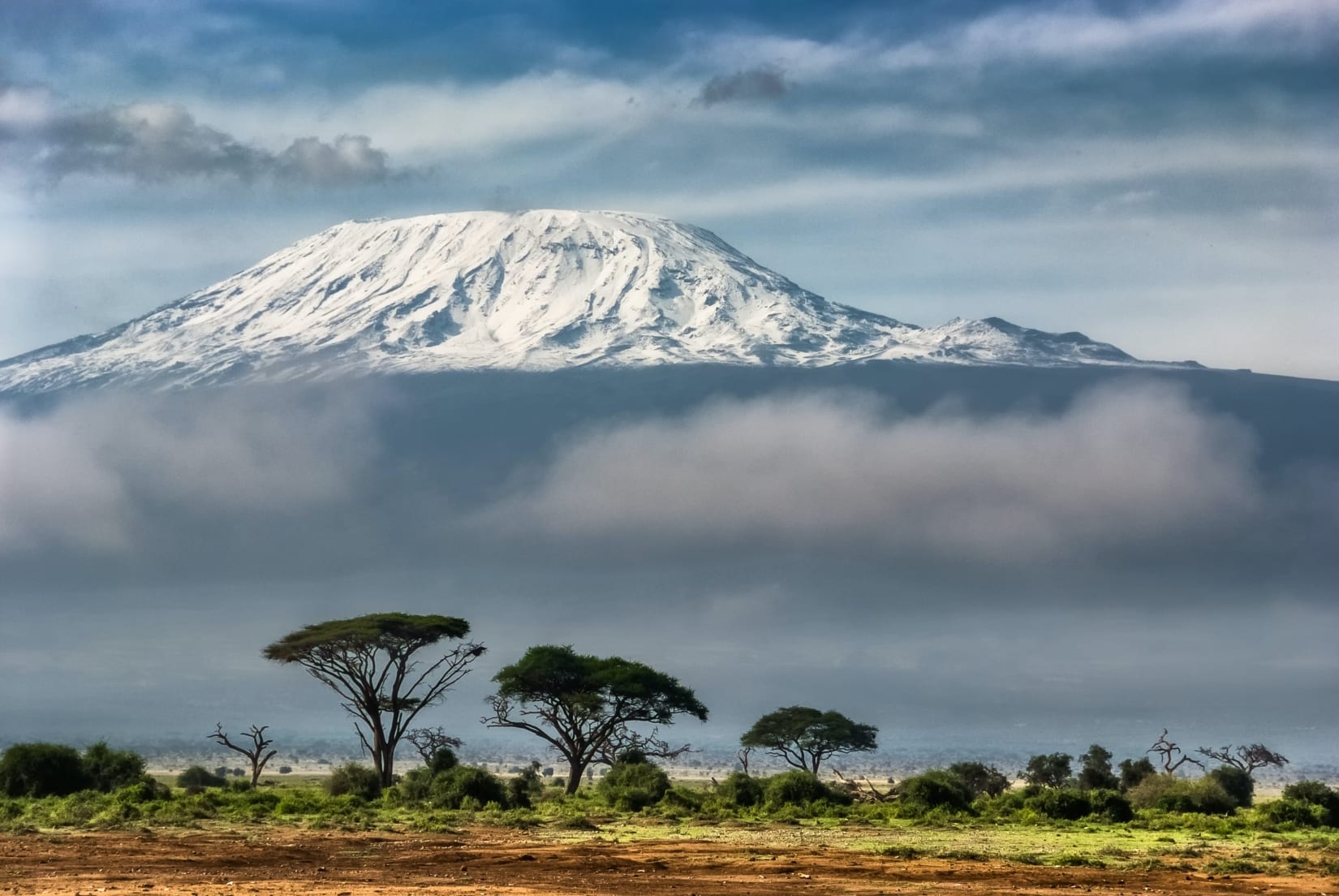
Most people who fail on Kilimanjaro don’t fail because they weren’t fit enough. They fail because they picked the wrong route, chose the wrong operator, or didn’t take acclimatization seriously. Success rates on a 5-day climb sit around 30%. On an 8-day climb, they climb to 85% or higher. The mountain is non-technical. It towers over the African plains at 19,340 feet as the tallest freestanding mountain in the world, yet offers a challenging climb that any fit trekker can complete with the right preparation. That’s the line that makes Kilimanjaro so seductive and so dangerous at the same time. Everyone thinks they can do it. The ones who do are the ones who prepared properly.
This is not a simple hike. It is a serious high-altitude expedition that passes through five distinct climate zones in just a few days, from rainforest to arctic summit conditions.
The Routes
There are seven official routes to climb Mount Kilimanjaro: Lemosho, Machame, Northern Circuit, Marangu, Rongai, Shira, and Umbwe. The one you choose is the single most consequential decision of your entire trip.
Lemosho (8 days): The Best Overall
The Lemosho Route is the best all-around option on the mountain. Starting from the remote western side, it crosses the legendary Shira Plateau, offers 360° panoramic views, and delivers a 90–95% summit success rate. It traverses remote rainforest, passes through five distinct ecological zones, and merges with the Machame route after a few days of genuine solitude. The 8-day itinerary is the gold standard. The extra acclimatization day over a 7-day version boosts summit chances by 10–15%. Costs run approximately $2,500–$4,000 with most mid-range operators.
Machame (7 days): The Popular Choice
The Machame Route is nicknamed the “Whiskey Route” and it is the mountain’s most popular path. It starts at Machame Gate on the southern slope, traverses multiple climatic zones, and delivers strong acclimatization. Over 20,000 people climb it each year. That popularity is its only real drawback: it gets overcrowded during peak season. It’s a legitimate choice for strong hikers who want scenic variety and a proven acclimatization profile. Do not do it in 6 days.
Marangu (5–6 days): Skip It
This is the one to avoid. Known as the “Coca-Cola Route,” it is the oldest, most established path on the mountain and the only one with an out-and-back itinerary. People choose it because it has a gradual slope and is the only route that offers sleeping huts. The success rate is among the lowest on the mountain. The standard 5-day itinerary does not allow enough time for proper acclimatization. The huts sound appealing until you realize you’re sharing dormitories with strangers, sleeping at the wrong altitude, and rolling the dice on your summit.
Rongai (7 days): The Quiet Alternative
Rongai is the only route that approaches Kilimanjaro from the north, near the Kenyan border. Foot traffic is still low relative to the southern routes. It works well for climbers who want a more remote experience and for those climbing during the rainy season, since the north side receives less precipitation. Costs range from approximately $1,700–$2,500 for 6–7 days.
Northern Circuit (9 days): The Highest Odds
The Northern Circuit is the newest and longest route on the mountain, nicknamed the “360 route” or the “Grand Traverse.” The extended itinerary produces the highest overall summit success rate of any route, roughly 90%. It costs more and takes longer. It delivers.

When to Go
The two dry seasons are your targets: December to mid-March and late June to October. Summit success rates peak during these windows and trail conditions are at their best.
Average summit temperatures range from -7°C in the warmer months to -29°C in July and August. Cold does not equal impossible. It means preparation matters.
July and August are the most popular months. To avoid the crowds, aim for June, September, or October. January and February are the quietest months with stable weather. You can expect some snow at higher altitudes, but it is manageable.
Avoid April, May, and November entirely. The long rainy season makes trails slippery, muddy, and miserable. There is a $200 per person discount for climbing during this window. That discount is not worth it. Save the date for dry season and spend the money on a better operator.
The Costs: What You’ll Actually Pay
Be honest with yourself about what this trip costs. A Kilimanjaro trek runs between $2,000 and $6,000, depending on the operator, route, and level of service. For a safe and successful summit, budget at least $3,000 to $4,000 with a reputable company.
As of 2025, the benchmark price sits around $2,700 for a seven-day climb. Anything below that is a red flag. Nearly $1,000 goes directly to park fees alone.
Here is what those park fees actually look like: conservation fees are $70 per day ($490 for a 7-day trek), camping fees run $50 per night, hut fees on the Marangu Route are $60 per night, and there is a $20 per person rescue fee. Tanzania also charges 18% VAT on all climbing services.
Independent climbing is not allowed on Kilimanjaro. Every trek requires a team of professional guides, porters, and cooks. Ethical operators follow Kilimanjaro Porters Assistance Project (KPAP) guidelines, ensuring fair wages and working conditions. A responsible operator includes these wages in their pricing. Budget companies often pay porters as little as $5 per day. Who carries your gear and cooks your food at 4,000 meters should be treated with basic dignity.
Don’t forget the extras. Most climbers tip between $250 and $350 per person, distributed among guides, assistant guides, cooks, and porters. Mountaineering insurance covering high-altitude trekking and emergency evacuation runs $150 on the low end and up to $550 for comprehensive options like Global Rescue. For most nationalities, the Tanzania visa fee is $50. U.S. citizens typically pay $100 for a multiple-entry visa.
Choosing an Operator
This is where most people make the worst decision of their trip. Over a hundred companies in Tanzania hold mountain trekking licenses. Only a dozen maintain offices, permanent climbing bases, portable bottled oxygen systems, and vehicles.
Three names consistently rise to the top for mid-range and premium climbers: Altezza Travel, Climbing Kilimanjaro, and Climb Kili. Altezza is the largest and most safety-focused local operator. In 2025, they became the first Tanzania-registered tour operator to secure $3 million in public liability coverage underwritten by Lloyd’s of London. Climbing Kilimanjaro has been running trips on the mountain longer than most. For those on a tighter budget, Tanzania Expeditions books directly with local guides, and their private tours run 30–50% less than packages from overseas operators.
Whatever operator you choose, verify they are KPAP-certified for porter treatment and that their guides carry pulse oximeters and supplemental oxygen on every climb.
The most important thing to remember is that a very cheap package almost always means corners have been cut somewhere, and on a mountain like Kilimanjaro, that’s not a risk worth taking.
Where to Stay Before and After
Your base is Moshi. It is a small Tanzanian town about 30 km from Kilimanjaro National Park, and according to a UN-Habitat study, it is the cleanest town in Tanzania. Most trekkers use it for rest and logistics before and after the mountain.
For budget travelers, hostels in Moshi run $20–$50 per night on Hostelworld. The Uhuru Peak Hostel and Springlands Hotel are climber favorites that store luggage during your trek. Mid-range options include Keys Hotel at $60–$80 per night and Chanya Lodge from around $100 for a double with breakfast. Both are bookable on Booking.com. For the splurge, Ameg Lodge Kilimanjaro offers an outdoor pool, a fitness center, and views of the mountain.
Arrive at least one full day before your climb starts. Kilimanjaro International Airport (JRO) is roughly 50 km from Moshi. Most operators include airport transfers, but budget an extra $20 each way if not.
Getting There
Kilimanjaro International Airport (JRO) is the main entry point. It sits roughly 50 km from Moshi and about 45 km from Arusha. Both cities serve as common bases for Kilimanjaro climbs, though Moshi is closer to the mountain and the better choice for most climbers.
Most major European carriers connect through their hubs. KLM flies via Amsterdam, Qatar Airways via Doha, and Ethiopian Airlines via Addis Ababa. Flights from the U.S. typically run $800–$1,400 roundtrip with one stop. Search fares on Google Flights and book directly with the airline once you have a route.
Most reputable operators include airport transfers in their package price. If yours does not, budget $20–$30 each way for a taxi from JRO to Moshi. Verify this before booking.
What to Pack
The most important clothing principle on Kilimanjaro is layering. You pass through tropical rainforest, moorland, alpine desert, and arctic summit conditions. One outfit does not cover all of that.
Your hiking boots are the most important piece of gear. They must be waterproof, provide solid ankle support, and be fully broken in before departure. Do not buy them the week before. You do not need a full mountaineering boot since you will not be using crampons, but light- to mid-weight waterproof boots with good ankle support are the right call.
A sleeping bag rated to -18°C (0°F) is the minimum standard. Temperatures at summit camp can drop to -20°C or lower. Trekking poles reduce strain on your knees on the descent and help with balance on rocky sections. Bring them.
Talk to your doctor about Diamox (Acetazolamide) at least four weeks before departure. It requires a prescription in most countries and can cause side effects worth testing before you are above 4,000 meters. Take it before your headache starts, not after. Drink at least 3–4 liters of water per day on the mountain. Dehydration accelerates altitude sickness faster than almost anything else.
Bulky or expensive items you may not use again, like four-season sleeping bags, trekking poles, and heavyweight jackets, can be rented in Moshi or Arusha. Personal items that require a good fit, including your hiking boots, socks, and base layers, should be your own. Never rent boots for an 8-day climb.
The Climb Itself: What to Expect Day by Day
On the Lemosho 8-day itinerary, the arc looks like this:
Days 1–2 take you through the rainforest from Londorossi Gate up to Big Tree Camp and Shira Camp 1. These are the best days: birds everywhere, green and warm, lungs full of oxygen you are about to stop taking for granted.
Day 3 crosses the Shira Plateau, one of the great walks on the mountain. Views of Meru to the west on a clear morning. You are now at 3,800 meters.
Day 4 is the tactical heart of the climb. You walk high to Lava Tower (4,600m) before sleeping low at Barranco Camp (3,900m). This “climb high, sleep low” pattern is exactly why Lemosho has such strong success rates.
Day 5 involves the Barranco Wall, a steep 300-meter scramble that looks terrifying and isn’t. Most people are surprised by how manageable it is. You reach Karanga Camp by afternoon.
Day 6 is short on distance and critical on acclimatization. You push to Barafu Camp at 4,600 meters. Eat a real meal, rest, and sleep by 7pm. Your alarm goes off around midnight.
Summit night is the hardest thing most people will do in their outdoor lives. The summit zone is bitterly cold, with strong winds and temperatures that can dip to -20°C or lower. You walk at a crawl. The Swahili mantra “pole pole” (slowly slowly) is not just cultural flavor. It is your strategy. The summit is Uhuru Peak at 5,895m, reached at around sunrise.
Day 8 is the descent all the way to Mweka Gate. Your knees will hate you. Your soul will not.
The Hidden Gem: Kosovo Camp
Most operators summit from Barafu Camp at 4,600 meters, setting off at midnight for a grueling 9-hour push in the dark. A small number of operators, including Climb Kili, use Kosovo Camp at 4,900 meters instead. That is 300 meters higher. Climbers ascend from Barafu to Kosovo in daylight, sleep at altitude, and start the final push closer to the summit with a shorter and slightly warmer summit night. Climb Kili’s 98% summit success rate is directly connected to this approach. It costs more and not every operator offers it. If summit odds matter to you, and they should, request it specifically.
The Justified Splurge: An 8-Day Lemosho Over a 7-Day
The price difference between a 7-day and 8-day Lemosho itinerary runs $200–$400 per person due to additional park fees and staff time. Spend the money. Adding the extra acclimatization day statistically improves summit success by nearly 25%. The whole point of this trip is standing at 5,895 meters at sunrise. Shaving a day to save $300 is one of the worst trade-offs in adventure travel.
What to Skip: The Marangu Route and Rock-Bottom Operators
The “Coca-Cola Route” earns its name for being accessible and comfortable by mountain standards. Huts instead of tents. A gentle gradient. A fast turnaround. The acclimatization profile is poor. The summit success rate is among the lowest on the mountain. You travel all the way to Tanzania, spend thousands of dollars, and give yourself a coin-flip chance of seeing the summit. Skip it.
The same logic applies to any operator priced below $1,800 for a full guided climb. Park fees alone can reach nearly $1,000. Add guide and porter wages, food, and equipment, and any company offering prices below $1,500 is cutting corners somewhere. That somewhere will be your safety, your food quality, or your porters’ wages.
Getting Around
Within Moshi, taxis are cheap and widely available. Budget $5–$10 for rides around town. Your operator handles all transport to and from the mountain gates, and most include airport transfers. Confirm this before signing a contract.
For day trips around the area, including Marangu village or the Materuni Waterfalls, shared minibuses (dala-dalas) run regularly and cost under $1. For more comfort, negotiate a rate with a local taxi driver for a half-day. Expect to pay $30–$50 for a half-day hire.
Getting between Moshi and Arusha (for safari departures) costs around $5–$10 on a shared shuttle. Private transfers run $40–$60. Book through your operator or accommodation.
Where to Eat and Drink in Moshi
Moshi’s food scene is small but solid. Your meals on the mountain are handled by your operator’s cook, so the focus here is the days before and after your climb.
Indoitaliano is the best restaurant in town for a pre-climb splurge. Wood-fired pizzas, good pasta, and a full bar. Expect to pay $12–$20 per person. It is worth it the night before a week on the mountain.
Kilimanjaro Coffee Lounge is the spot for breakfast and coffee. The region produces some of the best Arabica coffee in Africa, and this is the place to drink it. Breakfast runs $5–$8.
The Glacier is a reliable mid-range option popular with trekkers. Solid local and international menu, cold beer, and a courtyard. Mains run $8–$15.
For cheap local eating, the central market area has street food stalls serving grilled meats, rice, and beans for $2–$4. Eat where the locals eat.
Hydration before your climb matters as much as anything else. Drink bottled water and avoid ice in drinks if you are concerned about your stomach.
Kilimanjaro Travel Tips
Book 6–9 months out for peak season. Good operators on popular routes sell out early. Do not plan this trip in April for a July departure.
Get fit the right way. Kilimanjaro rewards hiking fitness, not gym fitness. Spend three months before your trip doing long-distance hikes with a loaded daypack, including at least a few with significant elevation gain. A hike like the Kalalau Trail or a multi-day trip in the American Southwest is ideal prep.
Carry your important items in your daypack. Pack it as if your duffel might not arrive at camp on time. Your waterproof shell layers, warm clothing, headlamp, water, and essential medications stay with you.
Tip in US dollars. Cash for guides, porters, and cooks is an important part of Kilimanjaro culture. US dollars are preferred. Bring enough for the KPAP-recommended amounts, around $250–$350 total per climber.
Verify your insurance before you go. Standard travel insurance does not cover high-altitude trekking. Check your policy explicitly for coverage at 5,895 meters.
Talk to your doctor about Diamox at least four weeks before departure. It requires a prescription in most countries. Side effects include increased urination and tingling extremities. Test it before you are above 4,000 meters.
Kilimanjaro FAQs
Do I need prior climbing experience to attempt Kilimanjaro?
No technical climbing skills are required. Kilimanjaro is not a technical climb. No ropes or ice axes needed. You do need cardiovascular fitness, mental resilience, and the ability to walk 6–8 hours per day for multiple consecutive days in challenging conditions. Most fit adults can do this with proper preparation.
How serious is the altitude sickness risk?
It is the number-one reason people don’t summit. At high altitude, there is less oxygen in the air, and your body needs time to adjust. Longer routes with more acclimatization days significantly reduce the risk. Stay well-hydrated, ascend slowly, and talk to your doctor about Diamox.
Can I rent gear in Moshi instead of carrying everything from home?
Yes, partially. Bulky or expensive items like four-season sleeping bags, trekking poles, and heavyweight jackets are available for rent in Moshi or Arusha. Personal items that require a good fit, including hiking boots, socks, and base layers, should be your own. Never rent boots for an 8-day climb.
Is it worth combining Kilimanjaro with a safari?
Yes. Most operators offer the combination. After 8 days at altitude, a few days watching animals from a Land Cruiser on the Serengeti is an entirely different experience. The contrast is part of the point.
What about Tanzania’s park fee increases?
A new gazette outlines proposed annual 15% increases to park fees starting in the 2026/2027 season. Going sooner rather than later makes financial sense. An 8-day climb could cost meaningfully more in 2027 than it does today.
Budget Summary
| Category | Budget | Mid-Range | Splurge |
|---|---|---|---|
| Guided climb (7–8 days, all-inclusive) | $1,800–$2,500 | $2,700–$4,000 | $4,000–$6,000+ |
| Accommodation in Moshi (per night) | $20–$50 (hostel) | $60–$100 | $150+ |
| Meals in Moshi (per day) | $5–$10 | $15–$25 | $30+ |
| Airport transfer (JRO to Moshi, each way) | $20 | $30–$40 | Included |
| Tips (total per climber) | $250 | $300 | $350+ |
| Mountaineering insurance | $150 | $300 | $550+ |
| Tanzania visa | $50–$100 | $50–$100 | $50–$100 |
| Flights (roundtrip, international) | $800 | $1,100 | $1,400+ |
| Estimated total (excluding flights) | $2,500–$3,200 | $3,400–$4,700 | $5,000+ |
Park fees ($70/day conservation + $50/night camping + $20 rescue fee + 18% VAT) are included in the guided climb cost with reputable operators. Verify this before booking.
Questions about planning your Kilimanjaro climb? Drop them at hello@outofmanhattan.com — we read everything.
Leave a Reply