
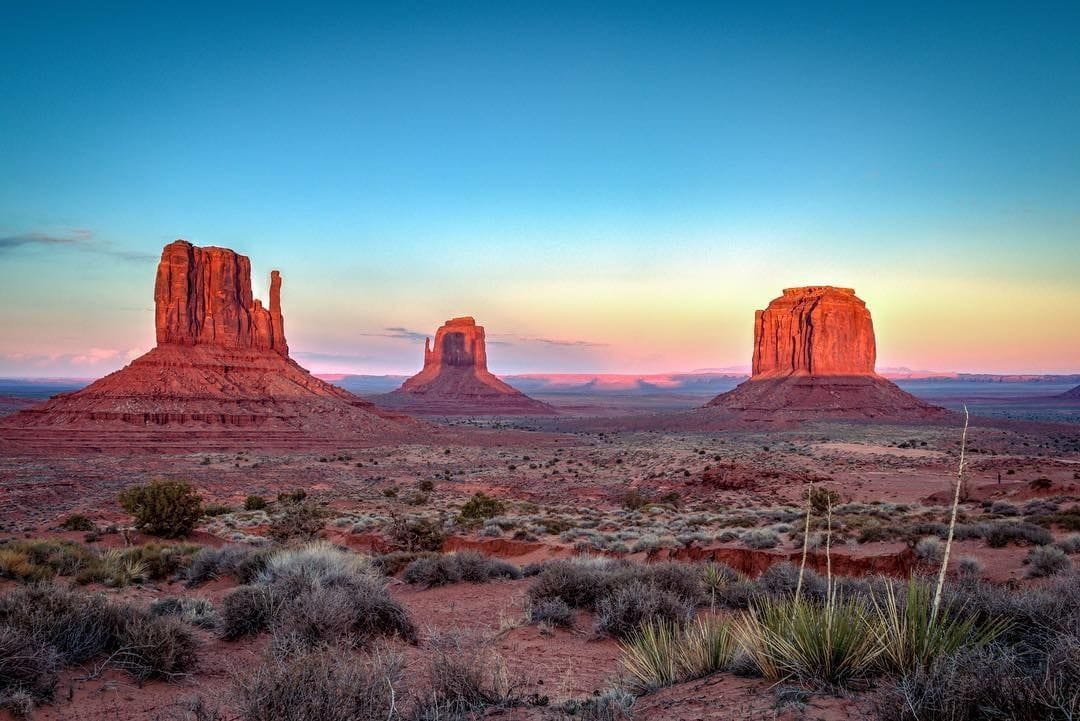
The American Southwest Is a Free Camper’s Paradise
Here’s something the travel industry doesn’t advertise loudly enough: millions of acres of public land across the American Southwest are open for free camping — no reservations, no fees, no check-in desk.
Thanks to the Bureau of Land Management (BLM) and the US National Forest system, travelers with a tent, a car, or a van can sleep under some of the most spectacular skies in the world for absolutely nothing. Grand Canyon views, riverside forest camps, red rock desert landscapes, and mountain meadows — all free, all legal, all waiting.
This guide was put together after six months of full-time travel across the Southwest, camping exclusively on public land. Every campsite listed here has been visited in person, is accessible with a standard 2WD vehicle, and can be found on iOverlander — the free app that every Southwest camper should have downloaded before they leave home.
The golden rule: pack in, pack out. These sites are free because they’re public land. Keep them clean so they stay that way.
What You Need to Know Before Free Camping in the Southwest
BLM Land vs National Forest
Most free camping in the Southwest falls into two categories:
BLM (Bureau of Land Management) land — federally managed public land where dispersed camping is generally permitted for up to 14 consecutive days at no cost. The Southwest has enormous swaths of it, particularly in Utah, Arizona, Nevada, and New Mexico.
National Forest land — similarly open to dispersed camping in most areas, again typically free for up to 14 days. Colorado in particular has exceptional National Forest camping.
The 14-Day Rule
On most BLM and National Forest land, you can camp at the same spot for up to 14 days before you must move at least 25 miles away. After 14 days you can return. This is how full-time van lifers and long-term travelers stay on the road indefinitely at zero accommodation cost.
Essential Apps and Tools
- iOverlander — the most important app for finding free campsites. Every site in this guide is listed there under the name provided. Free to download.
- FreeRoam — another excellent app for BLM and dispersed camping locations
- Gaia GPS — best for offline maps and navigation on dirt roads
- Recreation.gov — for any paid sites or permits near the free areas
Vehicle Requirements
Every campsite in this guide is accessible with a standard 2WD vehicle. Some roads are unpaved and require slower driving — noted where relevant. A high-clearance vehicle opens up additional options but is not required for any site listed here.
20 Free Campsites in the American Southwest
1. Buena Vista, CO — Buena Vista Overlook
Coordinates: N 38°50.972′, W 106°2.693′ iOverlander name: “Buena Vista Overlook”
The best campsite in this entire guide — and one of the finest free campsites in the United States.
This spot features over a dozen individual sites with generous space between them and unobstructed 360-degree panoramic views of the Collegiate Peaks — a series of 14,000-foot mountains that define the central Colorado skyline. Sunrises and sunsets here are genuinely extraordinary. The kind of views that make you understand why people sell everything and live in a van.
Level sites, easy 2WD access, and enough space that even on busy weekends you’ll have privacy. If you only camp at one spot on this list, make it this one.
Nearest town: Buena Vista, CO (short drive for supplies and coffee)
2. Grand Canyon North Rim, AZ — Rim Camping
Coordinates: N 36°25.940′, W 112°24.652′ iOverlander name: “Open view Grand Canyon”
Sleeping on the rim of the Grand Canyon for free is one of those experiences that sounds too good to be true — but it’s real.
The road to this spot runs through Kaibab National Forest and takes approximately 90 minutes on washboard dirt roads. It requires patience but not a 4WD vehicle. The payoff is a campsite positioned directly on the canyon rim with views straight down into one of the Seven Natural Wonders of the World.
There are multiple spots along the rim — some unlevel, some trashed by inconsiderate visitors. These specific coordinates mark the best one we found: right on the edge, clean, and positioned for maximum canyon views at sunrise.
Nearest town: Jacob Lake, AZ (nearest services — stock up before the drive in) Note: The road can be rough after rain. Check conditions before heading out.
3. Bryce Canyon, UT — Toms Best Spring Road
Location: Toms Best Spring Rd, approximately 10 minutes from Bryce Canyon National Park
One of the most consistently excellent free camping areas in Utah. Toms Best Spring Road runs through open forest just outside Bryce Canyon and is lined with dozens of free campsites — level spots with fire pits, good tree cover for privacy, and easy 2WD access throughout.
We stayed here for seven nights and never wanted to leave. The combination of easy park access (Bryce Canyon is 10 minutes away) and quality of the sites themselves makes this one of the best base camps in the Southwest for exploring the region.
Weekends get busy — the road fills up with other campers — but the sites are spread far enough apart that it never feels crowded.
Nearest town: Tropic, UT Pro tip: Bryce Canyon’s famous hoodoos glow orange at sunrise. Camp here, wake up early, and be at the Sunrise Point overlook as the light hits.
4. San Juan National Forest, CO — Piedra River Camp
Coordinates: N 37°14.251′, W 107°20.517′ iOverlander name: “Piedra East – Free”
A riverside campsite in the San Juan National Forest that sets the standard for what a peaceful forest camp should feel like. This spot sits directly alongside the Piedra River — surrounded by dense trees, with the constant sound of moving water as your background noise.
If the Buena Vista site is the best for views, this is the best for pure relaxation. No cell service, no noise, just forest and river. We exceeded our planned stay here by several days.
Nearest town: Pagosa Springs, CO Best for: anyone who needs to genuinely decompress
5. Grand Lake, CO — County Highway 455
Location: County Highway 455, just outside Grand Lake
The best free camping option near Rocky Mountain National Park — and it took us a while to find it. The east side of the park (Estes Park) has almost no dispersed camping available. Drive to the west side, just outside Grand Lake, and County Highway 455 opens up dozens of free sites within 10 minutes of the park’s west entrance.
Sites vary in quality — some have better views and are more level than others. Drive the road slowly and scout before committing to a spot.
Nearest town: Grand Lake, CO (charming mountain town, worth exploring) Park access: 10 minutes to Rocky Mountain National Park west entrance
6. Virgin, UT — Sheep Bridge Road (Near Zion)
Location: N Sheep Bridge Rd, Virgin, UT — approximately 20 minutes from Zion National Park
Zion National Park camping fills up months in advance. Sheep Bridge Road is the solution. Located just north of the small town of Virgin, this popular BLM area has numerous pull-out spots and side road campsites — all accessible with any vehicle — within 20 minutes of Zion’s entrance.
The area is also popular with mountain bikers and ATV riders, giving it a more active energy than the quieter forest camps elsewhere on this list. Great base camp for a Zion trip without the campground reservation headache.
Nearest town: Virgin, UT / Springdale, UT (Zion gateway town)
7. Grand Staircase-Escalante, UT — Cottonwood Canyon Road
Location: Cottonwood Canyon Rd, south side of Grand Staircase-Escalante National Monument
One of the most dramatic free camping areas in the entire Southwest. Cottonwood Canyon Road begins about 20 minutes west of Kanab near the famous Toadstool Hoodoos and can be driven north all the way to Bryce Canyon — passing through thousands of acres of BLM land and hundreds of potential campsites along the way.
The landscapes here are otherworldly — vast rock formations, slot canyon access, and colors that shift dramatically with the light. Popular with 4×4 vehicles but accessible in 2WD during dry conditions.
Note: Cottonwood Canyon Road becomes impassable when wet. Do not attempt in rain or immediately after. Nearest town: Kanab, UT Don’t miss: Toadstool Hoodoos (short walk from the road, free)
8. Coconino National Forest, AZ — Outside Flagstaff
Coordinates: N 35°22.758′, W 111°35.211′
A highly practical campsite for travelers using Flagstaff as a hub. Located 15 minutes outside of the city, this Coconino National Forest spot puts you within easy reach of Flagstaff’s restaurants and coffee shops while maintaining a genuine forest setting. From here, Page and the Grand Canyon South Rim are both under two hours.
Nearest town: Flagstaff, AZ (full services — grocery, gear shops, great restaurant scene) Day trip range: Grand Canyon South Rim (1.5 hrs), Sedona (45 mins), Page/Antelope Canyon (2 hrs)
9. Wasatch Mountains, UT — Salamander Flat Trailhead
Location: Salamander Flat Trail Head Campground, Wasatch Mountains
A free campground in the Wasatch Mountains that serves as a surprisingly accessible escape from Salt Lake City and Provo — just 15–20 minutes from both cities. A genuine mountain setting at essentially zero cost, within range of urban amenities.
Note: May charge a fee during peak summer months — verify current status on iOverlander before visiting. Nearest cities: Salt Lake City and Provo, UT
10. Ouray, CO — Riverside Forest Camp
Coordinates: N 38°3.815′, W 107°39.857′
Ten minutes outside the small mountain town of Ouray — nicknamed “the Switzerland of America” — this campsite sits along a creek in dense forest with access to nearby hiking trails. Ouray is one of the most scenic towns in Colorado and a base for some of the state’s best mountain hiking and hot spring soaking.
Nearest town: Ouray, CO (hot springs pool, excellent restaurants, historic downtown)
11. Tucson, AZ — BLM Desert Camp
Coordinates: N 32°37.712′, W 111°10.487′ iOverlander name: “BLM land”
Five days camping in a dense saguaro cactus forest 30 minutes outside of Tucson and Saguaro National Park — and in that time we saw three other people total. This is the definition of solitude.
The saguaro landscape is unlike anything in the rest of the Southwest — towering cacti in every direction, extraordinary desert sunsets, and complete silence. A popular area for shooting and target practice among locals, which is worth knowing in advance — this is public land and is shared by multiple user groups.
Nearest town: Tucson, AZ Don’t miss: Saguaro National Park (both east and west districts, small entry fee)
12. Moab, UT — Klondike Bluffs
Location: Klondike Bluffs Trail area, approximately 15 minutes from Moab
The best centrally located free camping option in the Moab area. Klondike Bluffs puts you 15 minutes from Arches National Park and 20 minutes from Canyonlands — the two most visited parks in Utah — while keeping you completely off the campground reservation system.
The first two miles of the road have around 100 campsites. Mountain biking trails run directly from camp. Busy in fall, packed in summer, snowy in winter — spring shoulder season is the sweet spot.
Nearest town: Moab, UT (full services, great restaurant scene) Park access: Arches (15 mins), Canyonlands (20 mins)
13. Quartzsite, AZ — Dome Rock Road
Location: W Dome Rock Road, Quartzsite, AZ
Over 500 campsites spread across the BLM land surrounding Dome Rock, five minutes from the small desert town of Quartzsite. Most spots are level and accessible with 2WD. One of the largest free camping areas in the Southwest and a legendary winter destination for snowbirds and van lifers.
Important: Flash flood risk exists in this area. Check weather forecasts and avoid camping in wash areas. Best season: October through March (extreme heat in summer)
14. Joshua Tree, CA — Coyote Lake BLM
Location: Coyote Lake area, 10–15 minutes from Joshua Tree National Park
A large, flat BLM camping area within easy reach of Joshua Tree National Park. Standard dispersed camping — plenty of space, most spots accessible with 2WD. Extremely busy during winter months when the desert climate draws crowds from LA and San Diego.
Pro tip: Arrive by Thursday if visiting on a winter weekend — prime spots disappear fast. Nearest town: Twentynine Palms, CA Park access: Joshua Tree National Park (10–15 mins)
15. Salton Sea, CA — Bombay Beach
Location: Bombay Beach, Salton Sea
One of the most unusual free camping spots in California. Bombay Beach sits on the eastern shore of the Salton Sea — an inland sea in the California desert that is simultaneously one of the state’s most fascinating and most overlooked destinations. Open lots with spots directly on the shoreline, no amenities, but a surprisingly social atmosphere in winter when other travelers converge here.
The Salton Sea has many free camping spots along its shores — Bombay Beach is the best of them for accessibility and atmosphere.
Best season: October through April
16. Valley of Fire, NV — BLM Outside State Park
Coordinates: N 36°25.378′, W 114°36.048′ iOverlander name: “BLM Outside Valley of Fire”
Thirty minutes north of Las Vegas, two minutes from Valley of Fire State Park, and 30 minutes from Lake Mead — this is one of the most strategically positioned free campsites in the Southwest. Flat desert views, complete isolation (we went three days without seeing another person in winter), and easy access to one of Nevada’s most spectacular state parks.
Valley of Fire’s red sandstone formations rival anything in Utah — and far fewer people know about it.
Nearest city: Las Vegas, NV (30 mins — stock up before heading out)
17. Lake Mead, NV — Private Beach Spot
Coordinates: N 36°21.828′, W 114°23.720′ iOverlander name: “Private Beach!”
A campsite directly on the water at Lake Mead — the largest reservoir in the United States. The road in is bumpy but manageable with 2WD if driven slowly. Multiple alternative spots exist along the way if the waterfront site is occupied.
Waking up to a private beach on Lake Mead at zero cost is one of those Southwest camping experiences that feels like it shouldn’t be possible.
Nearest town: Overton, NV / Boulder City, NV
18. Santa Barbara, CA — Los Padres National Forest
Location: Los Padres National Forest, 10 minutes north of Santa Barbara iOverlander name: “Painted Cave Pull Off”
Technically outside the traditional Southwest boundary but too good to leave off this list. A large pull-off on a forest road 10 minutes north of Santa Barbara offering panoramic views of the city and the entire Southern California coastline. Two nights here felt like five — the kind of campsite you extend your trip for.
Nearest city: Santa Barbara, CA (world-class restaurants, beaches, wine country)
19. Death Valley, CA — Abandoned RV Park
Coordinates: N 36°20.228′, W 116°35.840′ iOverlander name: “East and West Pad”
An abandoned RV park just minutes from Death Valley National Park — cement pads still in place, free to camp on, and almost completely unknown to most visitors. We spent three nights here in winter without seeing another soul. The road is unpaved but accessible with 2WD.
Death Valley is one of the most otherworldly landscapes in North America. Having a free base camp minutes from the park entrance changes the economics of visiting entirely.
Best season: November through March only. Death Valley summer temperatures are life-threatening.
20. Cibola National Forest, NM — Outside Gallup
Coordinates: N 35°23.850′, W 108°31.609′ iOverlander name: “Cibola NF”
A secluded forest campsite 10 minutes east of Gallup, New Mexico — one of the most underrated stops on any Southwest road trip. We spent nearly a week here with minimal traffic and complete quiet. Dozens of spots spread through the forest with enough separation for genuine privacy.
Note: The area can be closed in winter due to weather — check iOverlander for current conditions before visiting. Nearest town: Gallup, NM (Route 66 history, excellent Navajo food)
Essential Free Camping Tips for the Southwest
Download iOverlander before you leave — cell service is nonexistent at many of these sites. Download offline maps and save campsites before you lose signal.
Bring more water than you think you need — desert camping in particular requires serious water planning. A minimum of 1 gallon per person per day, more in summer.
14 days and move — the rule on BLM and National Forest land is 14 consecutive days maximum at one site. After that you must move at least 25 miles before returning.
Leave no trace — pack in everything, pack out everything. No exceptions. These sites are free because they’re public land — leaving trash is how areas get closed.
Check fire restrictions — the Southwest experiences fire bans frequently, especially in summer and fall. Check current restrictions at inciweb.nwcg.gov before building any campfire.
Tell someone your plans — many of these sites have no cell service. Let someone know where you’re going and when you expect to be back.
Carry recovery gear — a tow strap, portable air compressor, and basic toolkit are worth having for unpaved road situations.
Frequently Asked Questions
Is free camping legal in the American Southwest? Yes — dispersed camping on BLM and National Forest land is legal throughout the Southwest at no cost, subject to the 14-day stay limit and local fire/camping restrictions. Always verify specific area rules on the BLM website or with local ranger stations before arriving.
Do you need a 4WD vehicle for free camping in the Southwest? Not for the sites in this guide — every campsite listed here is accessible with a standard 2WD vehicle. Some roads are unpaved and require slower driving. A high-clearance vehicle opens up additional options but is not required for any site on this list.
What is iOverlander and is it free? iOverlander is a free app and website where travelers share GPS coordinates, descriptions, and reviews of free campsites, parking spots, and overlanding locations worldwide. It’s the single most useful tool for free camping in the Southwest and is completely free to use.
How do I find BLM land for free camping? The BLM’s official website (blm.gov) has maps of all BLM land by state. iOverlander and FreeRoam both overlay campsite locations on top of BLM land maps, making it easy to find specific spots. Google “BLM land [state]” for a quick visual overview of where public land is located.
What is the best time of year for free camping in the Southwest? Spring (March–May) and fall (September–November) are the sweet spots — mild temperatures across most of the region, lower crowds than summer, and access to high-elevation sites before winter closures. Desert sites (Quartzsite, Joshua Tree, Death Valley, Salton Sea) are best October through March. Mountain sites (Colorado, Utah highlands) are best June through October.
Can you camp for free near national parks? Yes — several of the sites on this list are within 15–30 minutes of major national parks including Zion, Bryce Canyon, Arches, Canyonlands, Rocky Mountain, and Grand Canyon. Free dispersed camping just outside park boundaries is one of the best strategies for budget national park visits.
Planning a Southwest road trip or van life adventure? Reach out at hello@outofmanhattan.com — we’re happy to help with any questions before you go.
Leave a Reply