
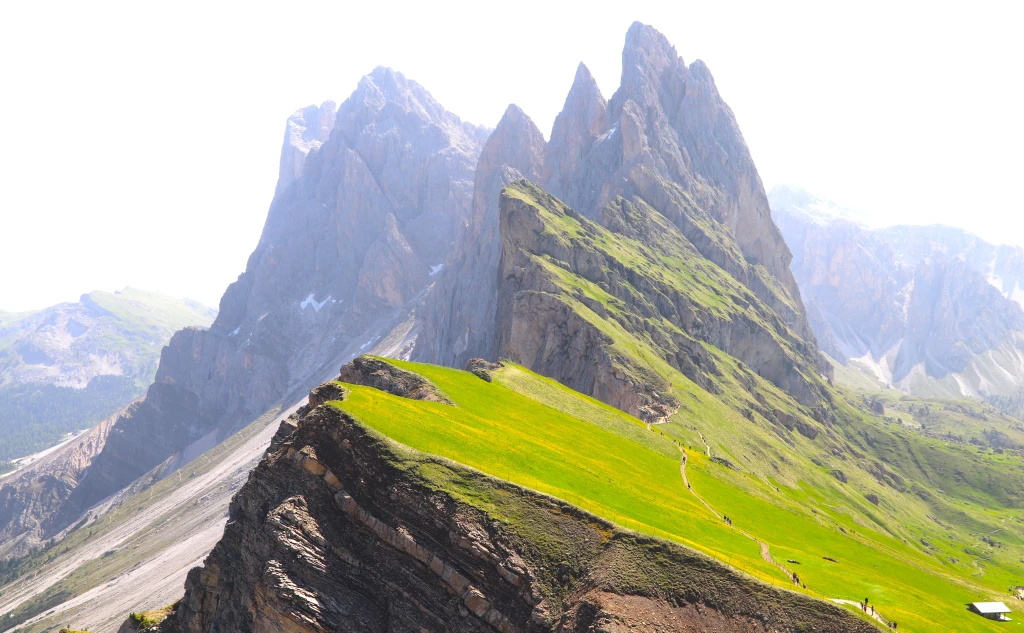
Why the Dolomites Should Be on Every Northern Italy Itinerary
Spending 3 days in the Dolomites on a budget is one of the most rewarding detours available in northern Italy — and far more accessible than most travelers realize. Most travelers in northern Italy stay on the well-worn circuit — Milan, Venice, Verona, Florence. The Dolomites sit just a few hours from all of them, and most travelers never go.
That is a significant mistake.
The Dolomites are a UNESCO World Heritage Site and one of the most dramatic mountain landscapes in Europe — a series of vertical limestone towers and ridgelines rising from broad alpine meadows in the South Tyrol region of northeastern Italy. The combination of Italian and Austrian culture (South Tyrol borders Austria and many places carry both Italian and German names), the world-class hiking, the traditional mountain huts serving cold beer and fresh pasta, and scenery that genuinely stops you in your tracks makes this one of the most rewarding three-day detours available anywhere in Italy.
And — crucially for budget travelers — much of the best of it is affordable. Hiking is free. The bus network is cheap. The hüttes are reasonably priced. With the right base and a simple plan, three days in the Dolomites is entirely within reach.
This is that plan.
Getting to the Dolomites on a Budget
The gateway city to the Dolomites is Bolzano (Bozen) — the capital of South Tyrol and the main transport hub for the region. Bolzano has the most affordable train connections and the best bus network into the surrounding valleys.
Train to Bolzano
- From Milan: approximately 3 hours, from €20–30 one-way
- From Verona: approximately 1.5 hours, from €12–20 one-way
- From Venice: approximately 2.5 hours, from €15–25 one-way
- From Innsbruck (Austria): approximately 1.5 hours, from €15–25 one-way
Book in advance at trenitalia.com for the best fares. Bolzano is a major stop on the Brenner railway — one of the most important rail corridors in Europe — so trains are frequent and reliable.
Why Bolzano Is the Right Entry Point
Bolzano has the cheapest train access into the Dolomites of any entry point. It also has a well-organized regional bus station with affordable connections to villages throughout the Val Gardena, Val Badia, and surrounding valleys. Car rental is available in Bolzano if you want maximum flexibility, but buses cover the main destinations well.
Choosing Your Base: Why Ortisei Is the Best Home Base
Ortisei (pronounced or-tee-say, also known as St. Ulrich in German) is the ideal base for a 3-day Dolomites trip and the town this itinerary is built around.
Located in the Val Gardena valley at approximately 1,200 meters elevation, Ortisei sits at the center of one of the finest hiking areas in the Dolomites. The town is small, charming, and genuinely alpine in character — quiet streets, wooden architecture, local restaurants, and the kind of unhurried mountain atmosphere that makes the Dolomites so restorative.
Most importantly: Ortisei has two gondola systems, one on each side of the valley, providing direct lift access to two of the most spectacular high-alpine areas in the region — Seiser Alm (Alpe di Siusi) to the south and Seceda to the north. This makes it possible to experience two completely different alpine landscapes in consecutive days without moving accommodation.
Getting from Bolzano to Ortisei
Ortisei does not have a train station — the two options are bus or taxi.
Bus (recommended): Regular SAD buses run from Bolzano bus station to Ortisei in approximately 45 minutes. Tickets cost €7–20 depending on the service. Check current schedules at sad.it — buses run throughout the day and the connection is reliable.
Taxi: Faster and more convenient if you’re arriving with luggage, but significantly more expensive at €50–80 for the journey.
Pro tip: Buy a MobilCard or SüdtirolMobil transit pass if you plan to take multiple buses during your stay. Day passes and multi-day passes are available and save money over individual tickets — ask at the Bolzano bus station or Ortisei tourist office.
Where to Stay in Ortisei
Budget Option — Airbnb from €125/night
Ortisei has a solid Airbnb selection with private rooms and apartments starting from around €125/night. Booking well in advance is essential — the Dolomites are extremely popular in summer (July–August) and rooms disappear quickly.
Mid-Range — Hotel Maria from €220/night
For those who want a more complete experience, Hotel Maria in the heart of Ortisei offers exceptional value at its price point. Included in the rate:
- Full breakfast daily
- Free local transit passes (covers buses throughout the valley)
- Access to the local pool facility with water slide, hot tubs, and sauna
- Central location within walking distance of both gondola stations
The transit passes alone save meaningful money over three days. Worth the upgrade if your budget allows.
Budget tip
Accommodation in Ortisei is the biggest daily cost. To offset it, focus spending on the lifts and save money on food by eating at the town’s grocery store — Buteiga Dal Pan Hofer — which stocks exceptional fresh pretzels, pastries, local cheeses, and cured meats at supermarket prices. An excellent option for breakfast and picnic lunches on the mountain.
Day One: Arrival and Ortisei
Afternoon — Arrive in Ortisei
Aim to arrive in Ortisei by early to mid-afternoon on day one. Check into your accommodation, drop your bags, and spend the rest of the afternoon walking the town.
Ortisei’s streets are quietly beautiful — traditional South Tyrolean wooden architecture, window boxes overflowing with geraniums, local craft shops (the valley has a centuries-old wood carving tradition), and mountain views in every direction. Arriving with time to simply walk and orient yourself sets up the following two days perfectly.
Evening — Dinner in Ortisei
Turonda is the standout dinner recommendation — a restaurant with an excellent menu and a terrace positioned perfectly for watching the sunset light move across the Dolomite peaks. The pizza here is exceptional (among the best in northern Italy) and the views during golden hour are extraordinary. Budget €15–25 for dinner.
For a cheaper option: grab provisions from Buteiga Dal Pan Hofer — fresh pretzels, local meats, and cheese assembled into an impromptu picnic eaten somewhere with a mountain view. One of the best budget meals available in the Dolomites.
Day Two: Seiser Alm (Alpe di Siusi)
Getting an Early Start
Set your alarm. The lifts open at 8:30am and arriving early makes a significant difference — the trails are quieter, the light is at its best for photography, and the hüttes are less crowded for lunch.
The Lift — €28 round trip
Take the gondola on the south side of Ortisei toward St. Ulrich – Seiser Alm. The lift rises from the valley floor to a panoramic mountain station with immediate views of Sassolungo (Langkofel) to the east — one of the most dramatic peaks in the Dolomites, a sheer vertical tower of limestone rising nearly 3,200 meters — and the vast rolling meadows of Seiser Alm (Alpe di Siusi) to the west.
Buy tickets at the lift station in Ortisei or book in advance at funiviaortisei.eu.
Seiser Alm — The Largest High-Alpine Meadow in Europe
Seiser Alm is the largest high-altitude alpine meadow in Europe — a broad, sweeping plateau at approximately 2,000 meters covered in wildflowers in summer, ringed by the jagged Dolomite peaks on all sides. The contrast between the gentle meadow and the violent vertical rock faces surrounding it is one of the defining visual experiences of the Dolomites.
Hiking trails fan out in every direction from the lift station. All trails are marked and well-maintained — difficulty ranges from gentle meadow walks to more demanding ridge routes.
Recommended trails:
- Alpe di Siusi loop (7.8 miles) — the full meadow circuit with continuous panoramic views. Allow 4–5 hours. Moderate difficulty.
- Mont Sëuc (2.6 miles) — shorter option with excellent views. Allow 1.5–2 hours. Moderate difficulty.
- Col da Fil (7 miles) — a longer, more varied route with ridge sections. Allow 4–5 hours. Moderate-strenuous.
All trails viewable and downloadable on AllTrails (search “Alpe di Siusi”).
The Hüttes — Mountain Lunch
Scattered throughout the Seiser Alm trails are traditional alpine hüttes — mountain huts serving food, drinks, and the kind of atmosphere that makes hiking in the Dolomites unlike anywhere else. Hikers of all nationalities gather at wooden tables outside, eating plates of pasta or goulash with cold local beer, surrounded by views that seem almost unrealistically beautiful.
Tschötsch Alm is the standout on the Seiser Alm trails — well-positioned, excellent food, and a terrace with views of Sassolungo that make it hard to leave. Budget €12–20 for lunch including drinks.
Afternoon — Return to Ortisei
Take the gondola back down to Ortisei in the afternoon. Explore the town, browse the wood carving shops, and rest your legs before dinner. The Val Gardena valley has a centuries-old tradition of wood carving — the shops throughout Ortisei sell hand-carved figures, furniture, and decorative items of genuinely impressive quality.
Day Three: Seceda
Early Start Again
Same discipline as day two — lifts open at 8:30am and the first hour on top of Seceda, before the crowds arrive, is extraordinary.
The Lift — €40 round trip
The Seceda gondola departs from the heart of Ortisei town — more convenient than the Seiser Alm lift. The €40 round-trip ticket is the highest single expense of the itinerary and worth every cent.
Buy tickets in advance at seceda.it/en/summer — particularly important on peak summer weekends when the lifts fill up.
Seceda — The Most Dramatic Viewpoint in the Dolomites
The gondola rises to the Seceda ridge at approximately 2,500 meters and the view at the top is one of the finest in the entire Alpine region.
The Seceda ridge is defined by a series of dramatic vertical rock spires — the Geisler/Odle group — rising from the ridge like the teeth of a saw above green meadows that fall steeply away into the valley far below. The combination of the jagged peaks, the vast sky, and the depth of the valley creates a sense of scale that photographs consistently fail to capture. You have to stand there to understand it.
The trail network on Seceda is exceptionally well-signed — directional markers every 5–10 minutes pointing to specific trails, hüttes, and destinations. Getting lost is genuinely difficult.
Hiking Options on Seceda
Rifugio Firenze descent — a downhill hike from the ridge to Rifugio Firenze, then the Fermeda chairlift back to the peak. One of the most enjoyable loop options on the mountain — the descent gives constantly changing views of the peaks and valley. Allow 2–3 hours including the chairlift return.
Seceda ridge loops (4–5 miles) — several marked loops around the ridge itself, ranging from easy to moderate. Good for hikers who want to stay high rather than descend. Allow 2–3 hours.
Selva di Val Gardena descent — for more adventurous hikers who want to extend the day, trails from Seceda lead down into the town of Selva di Val Gardena. From there, a short regional bus returns to Ortisei. Full day option — allow 5–6 hours.
The Hüttes on Seceda
Baita Troier Hütte is the essential stop on the Seceda trails. Beyond the standard mountain hut fare, Troier is famous for its Buchteln — traditional Austrian sweet rolls, soft and pillowy, served warm and dusted with powdered sugar. After a morning of hiking, they are extraordinary. More at troier.com. Budget €10–15 for food and drinks.
Return to Ortisei and Bolzano
Once back in Ortisei, check out of accommodation and take the bus back to Bolzano for onward connections. The bus journey is approximately 45 minutes and connects to trains for Milan, Venice, Verona, or wherever the itinerary continues.
Extending Your Stay — More Dolomites Worth Exploring
Three days barely scratches the surface of what the Dolomites offer. If your schedule allows additional time, these locations are all reachable by bus from Ortisei in 1–2 hours:
Lago di Braies (Pragser Wildsee) One of the most photographed lakes in the Alps — an impossibly turquoise mountain lake surrounded by Dolomite peaks in the Prags valley. Rowboat rentals available on the lake. Arrive early — it draws crowds by 10am in summer.
Tre Cime di Lavaredo Three vertical rock towers rising over 2,900 meters — the most iconic image of the Dolomites and one of the most recognizable mountain formations in the world. The 6-mile loop trail around the base is one of the finest hikes in Italy. Access requires a small road toll or bus from Toblach/Dobbiaco.
Val di Funes (Villnöss) A quiet valley beneath the Odle peaks with one of the most photographed church views in the Alps — the small church of St. Johann set against the vertical Geisler spires. Less crowded than Tre Cime and equally beautiful. Excellent hiking throughout the valley.
Dolomites Budget Breakdown
| Expense | Cost |
|---|---|
| Train to Bolzano (from Milan, one-way) | €20–30 |
| Bus Bolzano → Ortisei (one-way) | €7–20 |
| Accommodation (per night, budget) | €125–220 |
| Seiser Alm lift (round trip) | €28 |
| Seceda lift (round trip) | €40 |
| Hütte lunch x2 (Tschötsch + Troier) | €24–40 |
| Dinners x3 in Ortisei | €15–25/night |
| Groceries (Buteiga Dal Pan Hofer) | €10–20 total |
| Bus Ortisei → Bolzano (one-way) | €7–20 |
| 3-day total (budget accommodation) | €400–580 |
| 3-day total (Hotel Maria) | €550–760 |
The lifts are the main daily expense beyond accommodation. Everything else — the hiking, the trails, the views — is free.
Dolomites Travel Tips
- Book accommodation months in advance — the Dolomites are one of Italy’s fastest-growing destinations and summer beds disappear quickly, especially in July and August
- Get on the lifts at opening time — 8:30am means dramatically fewer people on the trails for the first two hours. The difference is significant
- Download AllTrails before you go — cell service on the peaks is unreliable. Download trail maps offline before taking the lift
- Dress in layers — mountain weather changes fast. Even in summer, temperatures at 2,500 meters can drop significantly. A packable windproof jacket is essential regardless of forecast
- The hüttes accept cash and card — but cash is preferred. Carry both
- South Tyrol is bilingual — Italian and German are both spoken and most signage is in both languages. Don’t be confused by German place names alongside Italian ones
- Buy the transit pass — if staying more than two days, the multi-day SüdtirolMobil bus pass saves money and removes the friction of buying individual tickets
- Sunscreen at altitude — UV intensity increases significantly above 2,000 meters. Bring reef-safe high-SPF sunscreen and reapply more frequently than you would at sea level
Frequently Asked Questions
Do you need a car in the Dolomites? Not for this itinerary — the bus network between Bolzano and Ortisei is reliable and affordable, and the gondola lifts provide access to the high-alpine areas. A car expands your options significantly (particularly for reaching Lago di Braies, Tre Cime, and Val di Funes independently) but is not required for a Ortisei-based 3-day trip.
When is the best time to visit the Dolomites? June through September is the prime hiking season — trails are open, lifts are running, and the meadows are in full color. July and August are peak season with the highest prices and most crowds. Late June and September offer the best combination of good conditions and manageable visitor numbers. Winter (December–March) transforms the Dolomites into a world-class ski destination.
How do you get to the Dolomites from Milan? Take a train from Milan Centrale to Bolzano in approximately 3 hours, then a SAD bus from Bolzano bus station to Ortisei in approximately 45 minutes. Total journey time door to door: approximately 4 hours. Train tickets from €20 one-way at trenitalia.com. Bus tickets from €7–20 at sad.it.
Is the Dolomites trip worth it in 3 days? Three days gives you a genuine, meaningful experience of the Dolomites — two full days on the high alpine trails plus arrival and departure time. You’ll see Seiser Alm, Seceda, and the Val Gardena valley in depth. It’s not enough to exhaust the region but it’s more than enough to understand why it’s one of the finest mountain destinations in Europe. Most visitors leave planning to return for longer.
What is a hütte in the Dolomites? A hütte (also called rifugio in Italian) is a traditional alpine mountain hut — a staffed shelter on the mountain trails serving food, drinks, and sometimes accommodation. Dolomite hüttes range from basic shelters to comfortable mountain restaurants with full menus. They are an essential part of the hiking experience in the Alps — a place to rest, eat a hot meal, drink a cold beer, and recover before continuing the trail. Most serve traditional South Tyrolean and Austrian dishes alongside Italian classics.
What is special about Seceda? Seceda is widely considered one of the most dramatic viewpoints in the entire Dolomites. The Geisler/Odle ridge offers a combination of sheer vertical peaks, sweeping valley views, and well-maintained trail networks that is hard to match anywhere in the region. The gondola access from Ortisei makes it one of the most accessible high-alpine experiences in the Dolomites — you can be at 2,500 meters and surrounded by some of the finest mountain scenery in Europe within 20 minutes of leaving the town center.
What should I pack for hiking in the Dolomites? Hiking boots or trail runners with good grip, layered clothing including a windproof jacket, at least 2 liters of water, snacks, downloaded offline trail maps (AllTrails), sunscreen, sunglasses, and a small first aid kit. Trekking poles are useful on steeper descents. The weather changes quickly at altitude — always be prepared for cold and wind regardless of the forecast at valley level.
Planning a trip to the Dolomites or northern Italy? Reach out at hello@outofmanhattan.com — we’re happy to help with any questions before you go.
Leave a Reply